
Bukhara
A first look
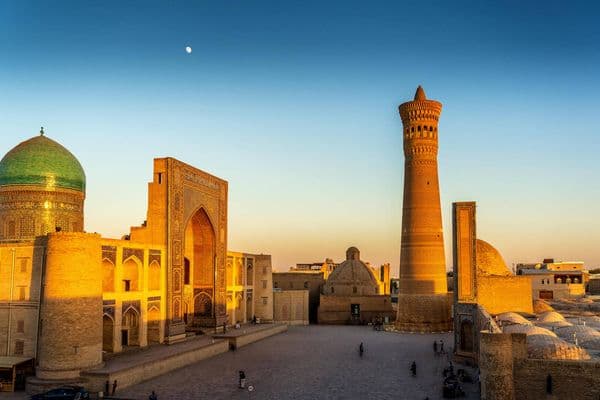
Bukhara wears its age more quietly than Samarkand. There is no single square that takes the breath away; instead there is a whole town of brick and dust the colour of the desert around it, and you find the great buildings by turning a corner straight into them.
It was a city of scholars before it was a city of monuments — a place where theology, medicine and astronomy were argued over while caravans unloaded outside the walls. That history is the reason the old centre survives so completely. It was never rebuilt to impress anyone, only maintained so it could keep being used.
What to see
Twenty centuries in one town
Bukhara has been lived in continuously for something close to two thousand years, and for much of that time it was the intellectual capital of Central Asia. Under the Samanids it became a centre of learning serious enough that its libraries shaped what the wider Islamic world knew. Ibn Sina, the physician whose textbook was still being taught in Europe centuries later, grew up in the region and read his way through those collections.
Later the town became the seat of an emirate, ruled from the Ark, and it held that role until the twentieth century arrived and ended it. The layers never erased one another. A Samanid mausoleum of bare patterned brick, a Karakhanid minaret and a boulevard from the Soviet decades can all sit within sight of each other.
How the old town works
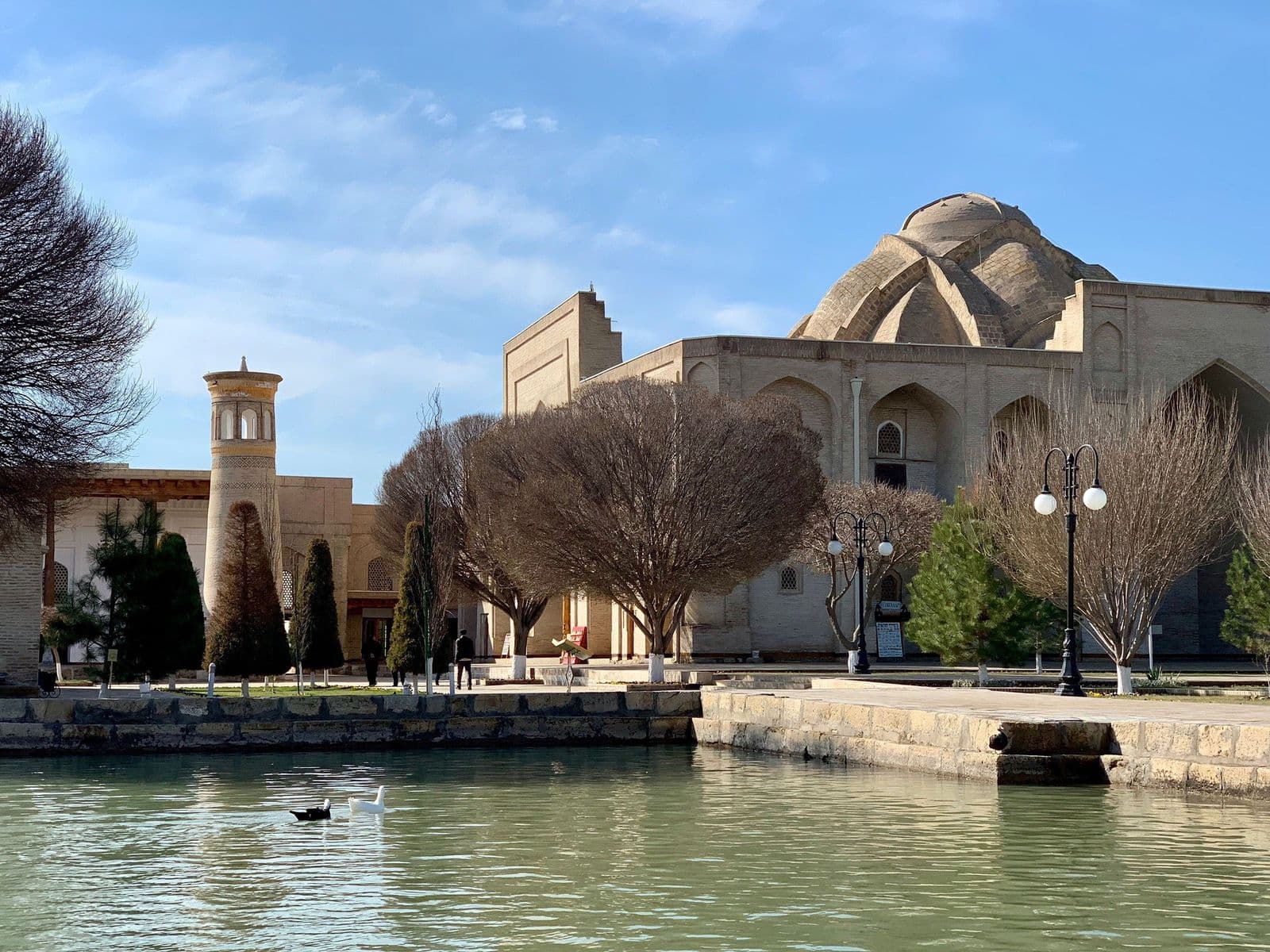
The old centre is small enough to walk across in an afternoon and dense enough to absorb a week. Lyab-i-Hauz is the usual starting point: a stone pool under old mulberry trees, ringed by teahouses, and one of the few public ponds in the region to survive the drive to fill them in.
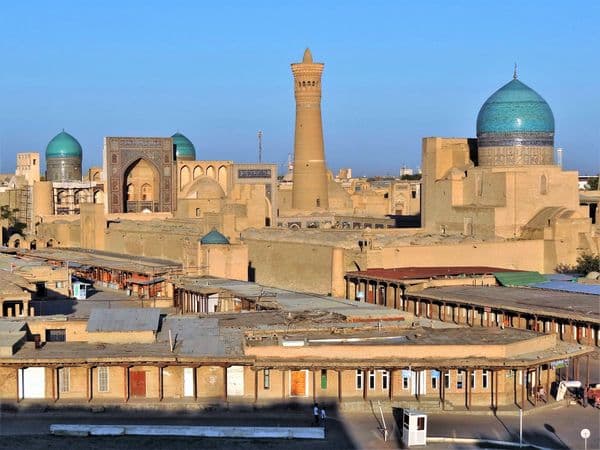
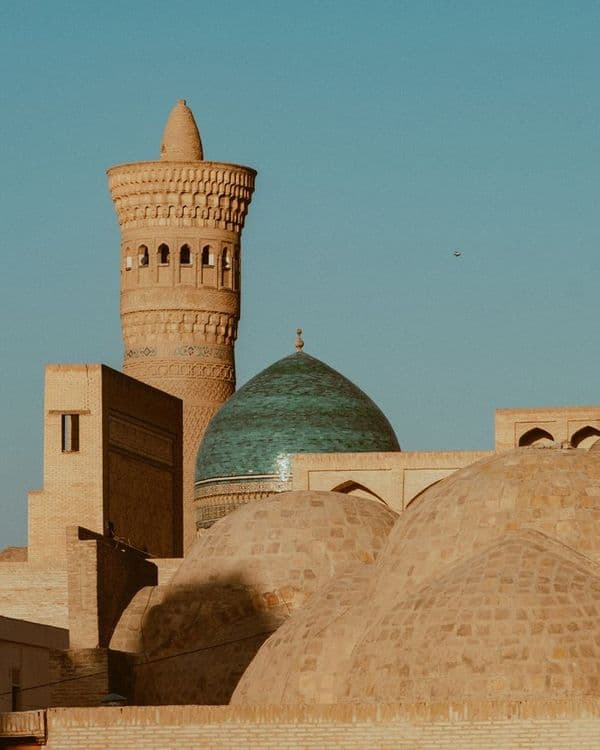
From there a chain of covered trading domes runs north-west, each once dedicated to a single trade — money changers, hat makers, jewellers — and each still used for selling. They lead to the Po-i-Kalyan ensemble, where the great minaret stands between a mosque and a madrasah. The Ark, the ruler’s citadel, closes the western end, and beyond it the Samanid mausoleum sits in a park, older than everything around it.
What is still made here
Bukhara kept its crafts working rather than turning them into a display. Metal chasing is the signature: trays, jugs and lamps worked with hammer and punch until the surface carries a pattern of tendrils and script. The scissors made here are the thing people carry home — forged into the shape of a stork, the beak forming the blades, an old trade sign of the bird-catchers.
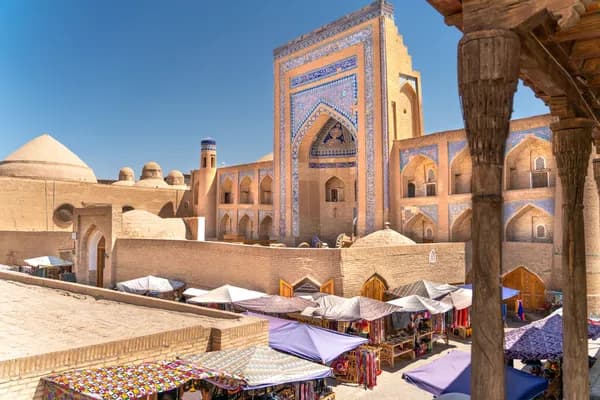
Gold embroidery, once made for the court, is still stitched onto velvet. Carpets and suzani come in from the surrounding villages, and miniature painting has been revived by a handful of workshops. In the trading domes you can usually find the person who made the object standing behind it, which is not true of many places on this route.
What to eat
Bukharan cooking is less about the cauldron and more about the grill. Kebabs come off the coals in small portions, often with raw onion and vinegar to cut the fat, and the samsa is baked against the oven wall until the pastry blisters and lifts.
Plov exists, naturally, but Bukhara is one of the places to try the simpler things around it: chickpea and lamb stews, thin soups heavy with herbs, cold yoghurt drinks when the heat is at its worst. Sweets are sold by weight — halva pressed into slabs, nuts in sugar, dried melon twisted into ropes. Tea is served in the shade at Lyab-i-Hauz, and there is no faster way to lose an afternoon.
When to come
The desert is close, and the climate says so. Spring is mild and green for a short window, and it is the pleasantest time to walk the old town on foot. Autumn lasts longer and is the season most travellers prefer: warm days, cool evenings, and light low enough to bring out the texture of the brick.
High summer is severe. The town is built for it — thick walls, shaded courtyards, water in the middle of the square — but the middle of the day is for sitting still. Winter brings cold wind off the steppe and empties the lanes. The monuments look their most austere then, which suits Bukhara better than it would suit most cities.
Where it fits in a route
Bukhara is the middle of the classic westbound line: Tashkent, Samarkand, Bukhara, Khiva. Arriving from Samarkand, it is the point where the landscape stops pretending and becomes desert, and the town reads differently because of it.
West of here the road crosses the Kyzylkum towards Khorezm, a long empty stretch that most travellers break with a night in a yurt camp near Aydarkul or a stop at Nurata. South-east of town, the Naqshbandi complex is the main pilgrimage site of the region and an easy trip from the centre. Many people give Bukhara a single night and regret it; two is the minimum that lets the old town become more than a list of names.
Tours that visit Bukhara
All tours →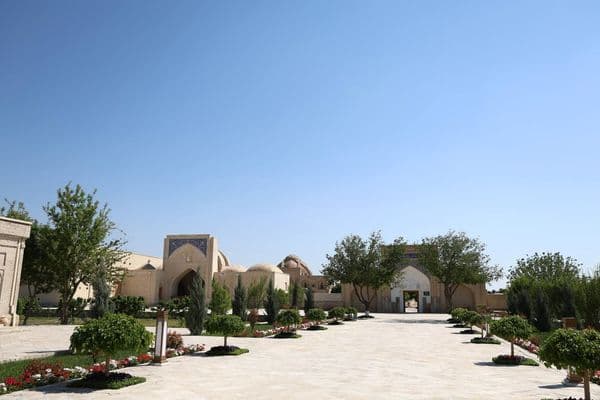 Pilgrimage
Bahauddin Naqshband Pilgrimage (2 Days)
 Pilgrimage
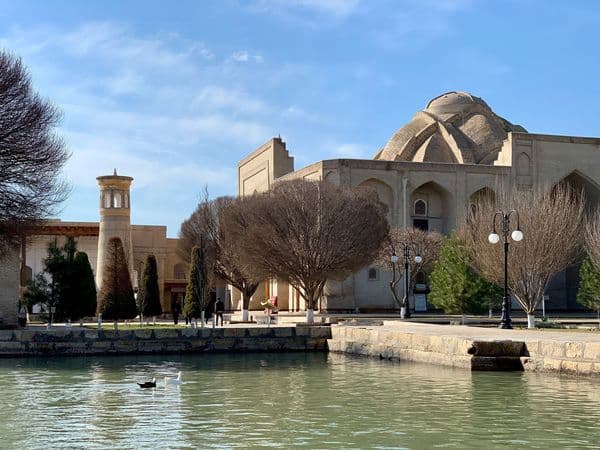
Seven Pirs of Bukhara — Sufi Pilgrimage (4 Days)
 Most popular
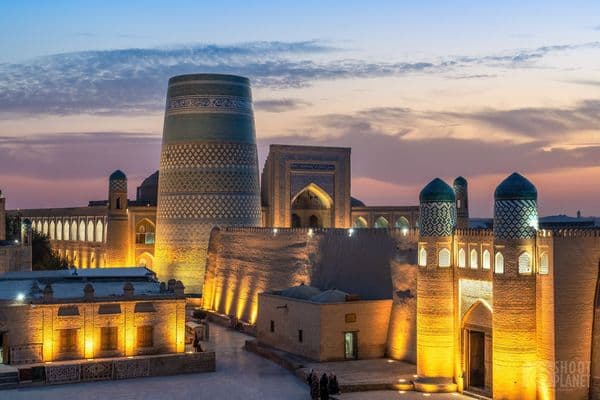
Classic Uzbekistan — Tashkent, Khiva, Bukhara & Samarkand (8 Days)
Majestic Triangle + Chimgan Mountains (7 Days)
Majestic Triangle — Tashkent, Bukhara & Samarkand (6 Days)
Bukhara by Train — Day Trip from Samarkand
No payment now. We reply with a tailored plan within a few hours.