Bukhara by Train — Day Trip from Samarkand
Tour details
About the journey
Bukhara’s old town is an open-air museum a comfortable train ride from Samarkand — and this day trip packs its essence into one guided day, with round-trip rail tickets included.
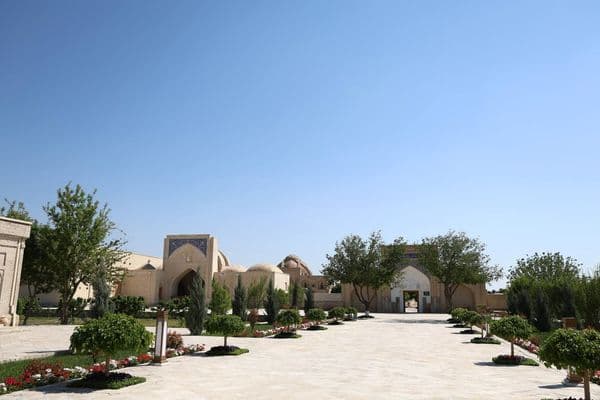
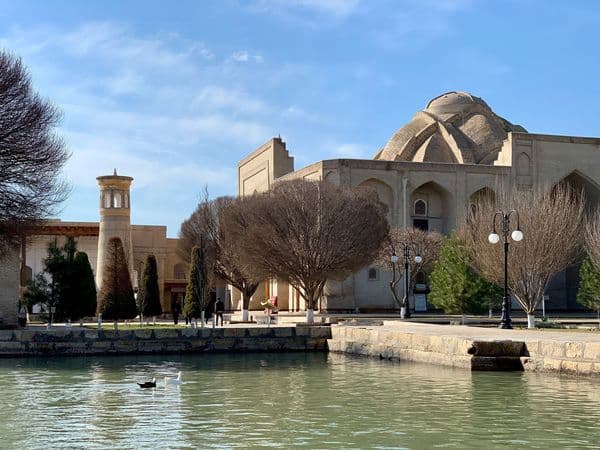
Wander the Lyabi Hauz Complex with the Nodir Divan Begi Madrasah and the Khoja Nasreddin statue, pass historic caravanserais and the Abdulla Khan and Ulugh Beg madrasahs, shop under the traditional trading domes — Toki Sarrafon, Toki Telpak Furushon, Toki Zargaron and Tim Abdulla Khan, stand before the Poyi Kalon Ensemble with the Kalon Minaret, Kalon Mosque and Miri Arab Madrasah, and see the Bolo Hauz Mosque and the walls of the Ark Fortress.
Two cities that are nothing alike
This is the point of doing them together. Travellers who see only one leave with an impression of Uzbekistan that the other would have corrected.
Samarkand is monumental and dispersed: enormous set pieces with modern city in between, built to impress arriving envoys. It works on you from a distance.
Bukhara is compact, low and continuous. The old town is a fabric rather than a series of monuments, still lived in, and the pleasure of it is being lost in it rather than standing in front of things.
Seeing both in quick succession makes each sharper. People who do this trip almost always come back with a clear favourite, and it is rarely the one they expected.
What a day in the old town covers
The Lyabi Hauz complex, which is where the old town gathers around water and where you will want to sit for longer than the schedule allows.
The trading domes — Toki Sarrafon, Toki Telpak Furushon, Toki Zargaron — which are functioning markets rather than reconstructions. People trade under them because people have always traded under them.
Poyi Kalon, where the minaret, the mosque and the madrasah face each other across a square that is the single most photographed space in the city and deserves the attention.
And the streets between all of these, which is the part that does not appear on any list and is the reason the old town works. Bukhara is walked rather than visited.
What the format cannot give you
The old town after dark, which is when Bukhara is at its best. The heat has gone, the day visitors have gone, and the place returns to the people who live in it.
The summer palace outside the city, and the shrines around it. Those belong to a longer stay and are worth one.
A slow morning. Bukhara rewards aimlessness more than any other city in the country, and a return train sets a limit on how aimless you can afford to be.
If you have room to stay a night here instead of returning, take it. We will say that plainly rather than selling you the day trip, and travellers who take the advice do not regret it.
Who this suits
Travellers based in Samarkand for several nights who want to widen the trip without moving hotels.
People on a fixed schedule who would otherwise see one city and wonder about the other. This format answers that question properly rather than leaving it open.
Repeat visitors who already know Samarkand and want a full day somewhere else without restructuring anything.
It suits families less well than the shorter city days do. It is a long day with a good deal of walking, and small children generally find the second half hard.
Practical notes
Rail tickets both ways are part of the arrangement, and the seats are the thing that has to be secured early. This trip depends on specific departures rather than on there being a train at some point.
The old town is walked almost entirely. The surfaces are old stone and brick and can be uneven, but there are no climbs of consequence anywhere on the route.
Shade is better here than in Samarkand — the streets are narrow and the domes are cool inside — which makes this an easier day in warm weather than the equivalent elsewhere.
Modest dress at the religious sites, as everywhere. The bazaars and trading domes have no such expectation.
When to do it
Shoulder seasons are best, and Bukhara handles crowds better than Samarkand does because the old town absorbs people into its streets rather than concentrating them in squares.
Summer is manageable here in a way it is not everywhere. The narrow streets and the domes give real relief, and the pools at Lyabi Hauz make the middle of the day pleasant rather than punishing.
Winter is quiet, sharp and photogenic, and the old town nearly empties. Some interiors have reduced access, which we will flag before you commit.
Any season, the trip is better on a weekday. Weekend crowds at Poyi Kalon change the experience of the square considerably.
Doing it the other way round
The same trip works in reverse for travellers based in Bukhara who want a day in Samarkand, and the rail line serves both directions equally well.
Which direction suits you better depends less on the cities than on where you would rather sleep. Bukhara is the more pleasant place to be in the evening; Samarkand has the greater concentration of monuments to fill a day.
Travellers who have time for only one base and want both cities usually do better staying in Bukhara and travelling out, rather than the reverse. The evenings are the reason.
Whichever direction you take it, the pairing is the point. Two cities that look nothing alike, seen close together, tell you more about the country than either does alone.
A word on what this trip is not: it is not a way of avoiding a choice between the two cities. Both deserve a proper stay, and travellers who have the room should give them one rather than treating either as an excursion from the other.
We run it because plenty of people genuinely do not have that room, and a well-built day is far better than skipping a city entirely. But if your schedule has slack in it, spend the slack here rather than elsewhere.