
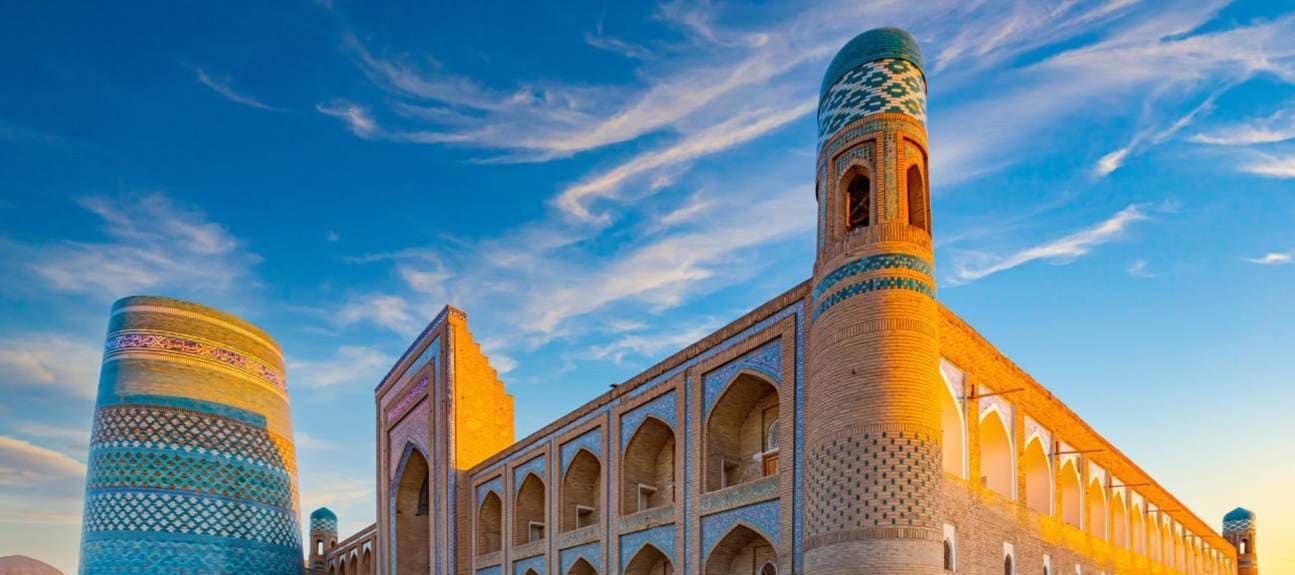
Khiva
A first look
Khiva is the most complete walled city left on the Silk Road, and the most argued about. Everything inside Itchan Kala has been restored, and the restoration is thorough enough that some travellers call it a museum rather than a town. Walk it at dawn, or after the day buses leave, and the argument stops mattering.
It stands at the edge of the Kyzylkum in the old land of Khorezm, and the desert explains its shape: walls high enough to throw shade, lanes narrow enough to stay cool, and a skyline of minarets built to be seen by anyone approaching across flat open ground.
What to see
The oasis and the khanate
Khorezm was a country before it was a province — an irrigated oasis on the lower Amu Darya with its own language, its own scholars and a long habit of outlasting the empires around it. Khiva itself rose late, becoming the capital of a khanate as the river shifted its course and older centres declined.
That khanate lived off the caravan road and, for a long stretch, off a slave market that gave the place a fearsome reputation among nineteenth-century travellers. The khans built accordingly: a walled inner city packed with madrasahs, mosques and palaces, all of it in mud brick and glazed tile, and all of it within a short walk of the throne.
Inside the walls
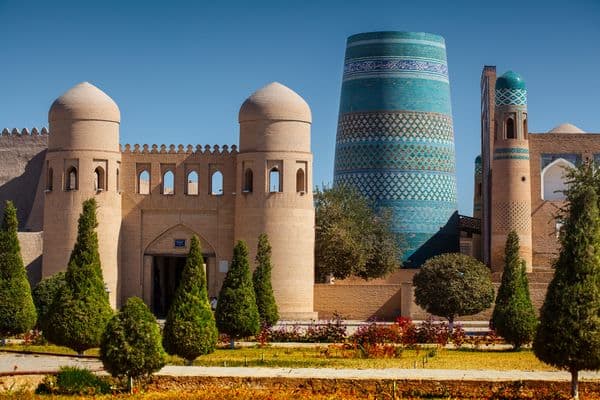
Itchan Kala is entered through gates in a rampart of mud brick that glows orange at either end of the day. Immediately inside stands Kalta Minor, the broad turquoise minaret that was never finished — the khan died and the work stopped where it stopped, which is why it has become the most photographed thing in town.
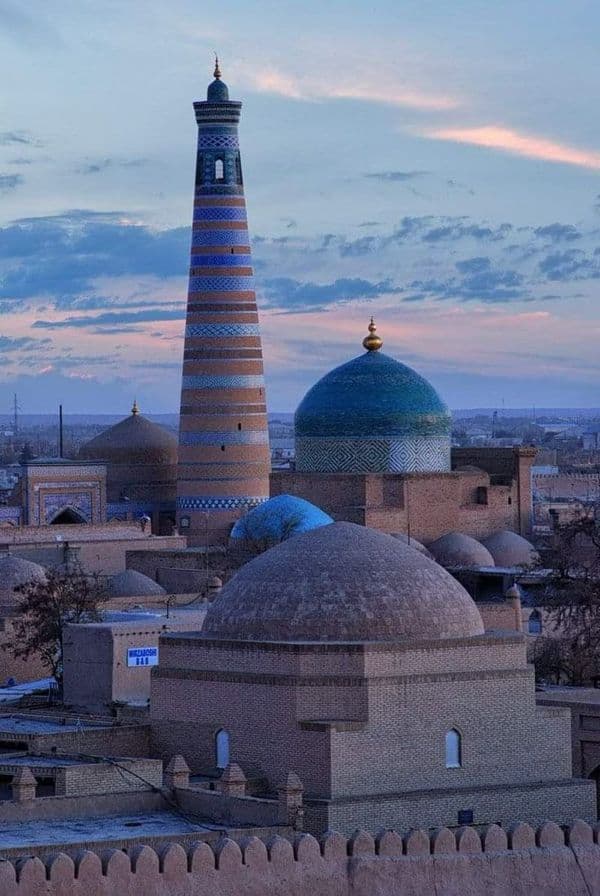
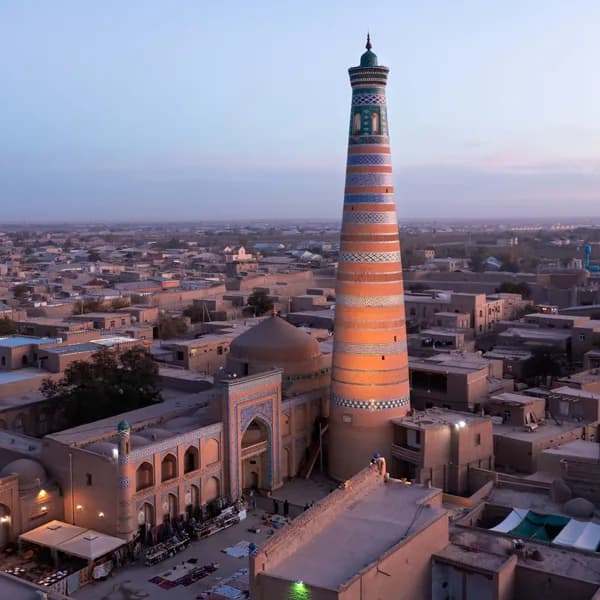
The Juma Mosque is the opposite of a monument: a low dark hall held up by a forest of carved wooden columns, cool in any weather, lit by shafts falling through openings in the roof. The minaret of Islam Khoja offers the climb and the view. Outside the inner wall, Dishan Kala is the working town where people actually live, and the difference between the two is instructive.
Wood, tile and thread
The craft of Khiva is carving. The columns of the Juma Mosque are the reference, and workshops around the old town still cut the same vegetal patterns into elm and poplar — doors, lecterns, boxes, and columns for houses going up now.
The tilework runs to a distinctive palette: white and turquoise on a deep blue ground, more geometric and cooler than the Samarkand range. Suzani from Khorezm has its own vocabulary of motifs, and carpets woven in the surrounding villages are heavier than those from the south. Because the town is small, the workshops are easy to find and usually open to anyone who wants to watch rather than buy.
What to eat
Khorezm has dishes you will not meet elsewhere, and the best of them is shivit oshi — noodles kneaded with dill until they turn deep green, served under a stew of meat and vegetables with a spoon of yoghurt on top. It looks alarming and tastes like the best idea in the region.
Tukhum barak comes second: square dumplings filled with egg and butter, boiled and eaten cool with yoghurt. Beyond that the desert diet applies — lamb, bread, melon, tea — and the melons of Khorezm have a reputation across the whole country. Meals in the old town are usually taken in courtyards, which is the only sensible arrangement in this climate.
When to come
This is genuine desert, and the seasons are sharper here than anywhere else on the route. Spring is short, green and lovely. Autumn is the reliable choice: warm, dry, melons at their best, and the walls at their most photogenic in low light.
Summer is fierce, hotter than Bukhara and far hotter than Tashkent, and the middle of the day inside the walls is not pleasant. Winter is properly cold, with wind off the steppe, and Khiva half-empty under a grey sky has an atmosphere that photographs badly and stays in the memory. Whatever the season, the first and last hours of daylight are when this town is worth walking.
Where it fits in a route
Khiva is usually the last stop heading west, reached across the Kyzylkum from Bukhara or by air into nearby Urgench. Because the old town is compact it needs less time than the cities before it — but it deserves the overnight, because the difference between Khiva with day visitors and Khiva without them is the whole experience.
From here the road runs north into Karakalpakstan, towards Nukus and the dried bed of the Aral Sea, the strangest and most sobering detour in the country. East of town the desert fortresses of Ellikkala stand in open ground, older than the khanate and far older than the walls you have just walked.
Tours that visit Khiva
All tours →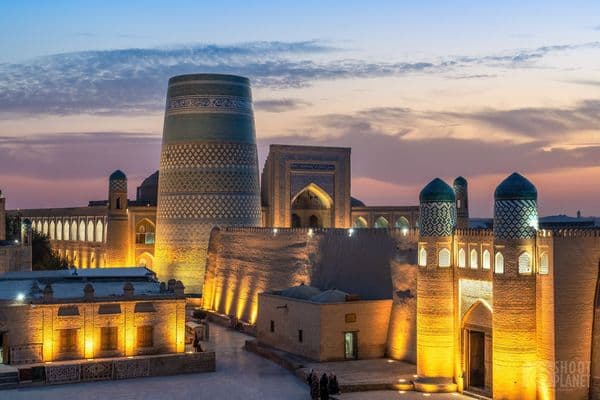
No payment now. We reply with a tailored plan within a few hours.