
Samarkand
A first look
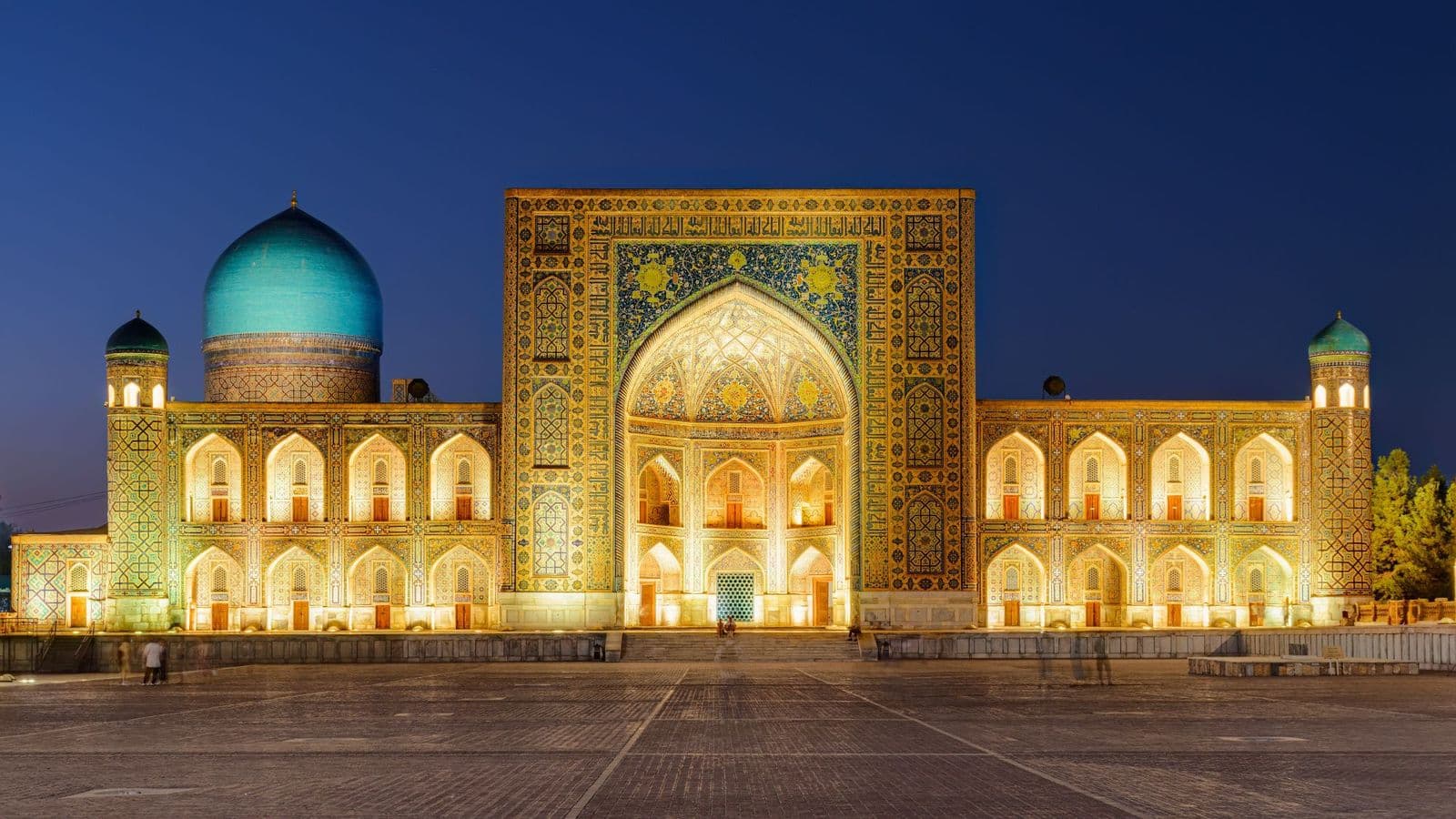
Samarkand is the city most travellers picture when they imagine the Silk Road: turquoise domes rising out of a dusty plain, portals tall enough to swallow a caravan, and tilework that shifts from blue to green as the light moves across it. It has been built, ruined and rebuilt for well over two millennia, and every layer is still visible if you know where to look.
What makes it worth more than a photograph is the scale of ambition frozen into it. This was a capital designed to impress ambassadors, and it still does the job. But the quiet corners between the monuments — where bread is stacked in the shade and old men play cards until the heat breaks — are where the city actually lives.
What to see
What Samarkand became
Long before the blue domes, this was Marakanda: a walled town on the Zerafshan that Alexander the Great took and admired. For centuries it grew rich on the trade roads meeting here, tying China to the Mediterranean, and it collected languages, religions and craftsmen the way port cities collect ships.
Genghis Khan ended that city. What stands today is the answer of a man who refused to accept the ruin — Amir Timur made Samarkand the capital of an empire and imported the best builders he could find or capture. His grandson Ulugh Beg, more astronomer than conqueror, added a madrasah and an observatory and mapped the stars from a hill on the edge of town. The result is a single coherent statement of Timurid ambition, which is rare in a city this old.
How the city is laid out
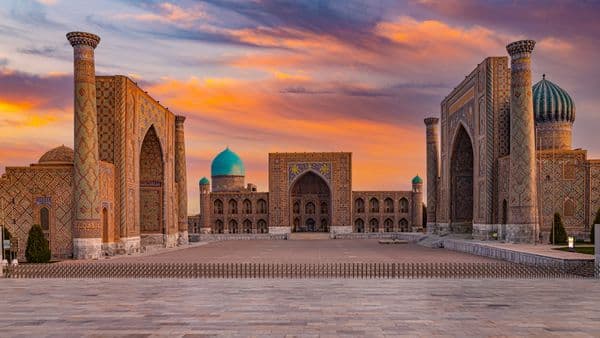
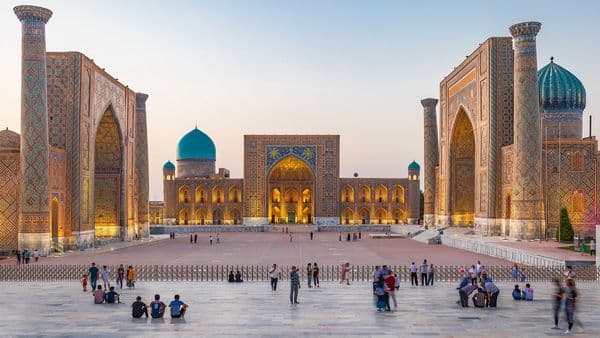
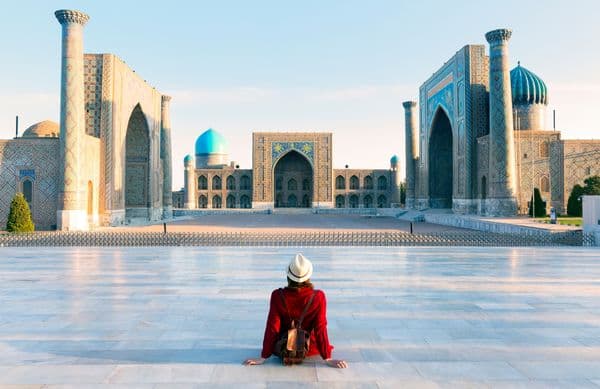
The Registan sits at the heart of it: three madrasahs facing one square, raised across different centuries yet arranged as if by one hand. From there the old city spreads north-east. The Bibi-Khanym Mosque stands beside the Siab Bazaar, so the grandest ruin in Samarkand shares a wall with its noisiest market.
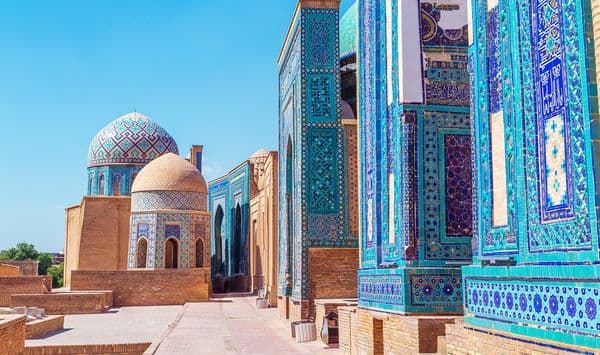
Keep going and the ground rises towards Afrosiab, the mound where the pre-Mongol city stood, with the avenue of tombs called Shah-i-Zinda climbing it in a corridor of tile. Gur-e-Amir, where Timur lies, sits apart to the south — smaller than you expect and better for it. Around all of this a later Russian town laid down a grid of wide streets and plane trees, and the two patterns still meet along the same boulevards.
Craft and colour
Samarkand craft is inseparable from Samarkand architecture, because both are about surface. Ceramic workshops still mix the glazes that give the domes their range of blues, and the best of them will show you the difference between the cold blue of Timurid tile and the warmer, greener tone that arrived later.
Outside the centre, paper is still made from mulberry bark the way it was when the technique came from China — beaten, pressed and burnished with stone until it takes ink without bleeding. Suzani embroidery is the other thing to look for: cotton or silk panels worked in chain stitch, traditionally sewn by a bride and her family. In the bazaar the same instinct for colour turns up in pyramids of spice and dried apricots.
What to eat
Samarkand argues with the rest of the country about bread, and Samarkand wins. The local non is denser and heavier than elsewhere, stamped in the middle, baked against the wall of a clay oven, and it keeps for days — which is why travellers used to carry it across the desert.
Plov here is layered rather than stirred: rice, carrot and meat cooked in a cauldron and served in distinct strata, paler and less oily than the Tashkent version. Beyond that, expect skewers of lamb grilled over vine cuttings, samsa pulled hot off the oven wall, and halva sold by the slab. Tea is green and drunk hot in the heat, and the bowl is filled only part way — a brimming bowl politely suggests the guest should be leaving.
When to come
Spring is the best of it. The plain turns green, the fruit trees blossom, and the tilework looks its best under a soft sky rather than a hard white one. Autumn is the other good season: the heat breaks, the markets fill with melons, grapes and pomegranates, and the light turns gold in the late afternoon.
Summer is genuinely hot and very dry — the kind of heat that empties the streets in the middle of the day and sends everyone under the trees. It is manageable if you start early and rest at midday, the way locals do. Winter is cold, sometimes with snow settling on the domes, and the monuments stand almost empty, which some travellers prefer and photographers usually do.
Where it fits in a route
Samarkand anchors almost every route across the country. Most travellers arrive from Tashkent and continue west to Bukhara, which makes it the second stop on the classic line rather than the first — a good thing, because it gives the eye time to adjust before the desert cities.
The natural detour runs south over the mountains to Shakhrisabz, the home town of Timur, where the ruins of his summer palace stand at a scale even Samarkand does not match. Northward the road heads towards Nurata and the lake and yurt camps at its edge, the usual way to break the long empty stretch before Bukhara. Whatever the direction, this is a city that deserves more than one night.
Tours that visit Samarkand
All tours →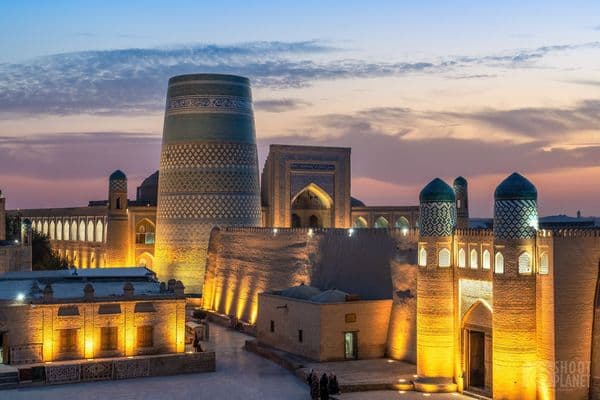 Most popular
Classic Uzbekistan — Tashkent, Khiva, Bukhara & Samarkand (8 Days)
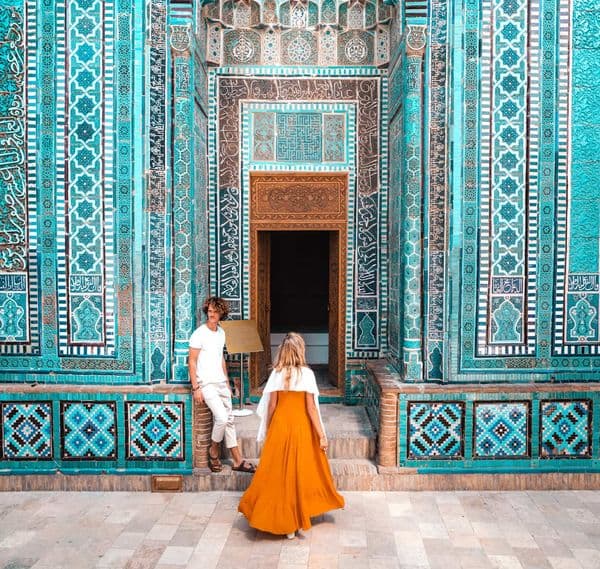
Majestic Triangle + Chimgan Mountains (7 Days)
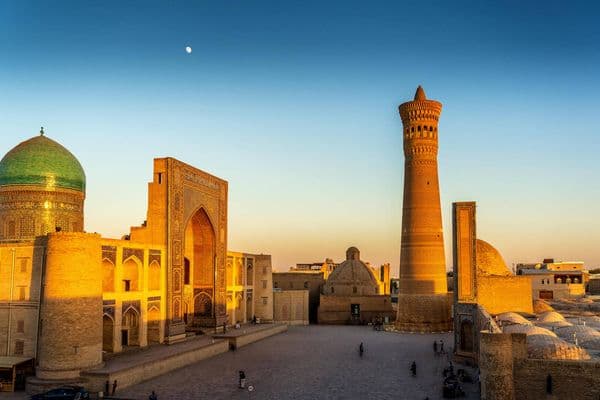
Majestic Triangle — Tashkent, Bukhara & Samarkand (6 Days)
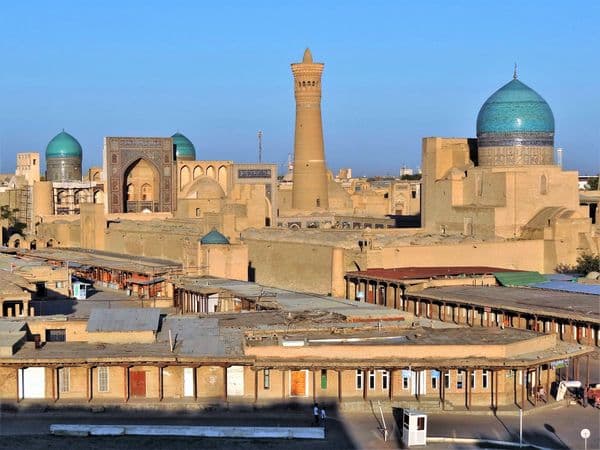
Bukhara by Train — Day Trip from Samarkand
Samarkand by High-Speed Train — Day Trip from Tashkent
Samarkand Day Tour
No payment now. We reply with a tailored plan within a few hours.