Khiva Day Tour — Ichan-Kala
Tour details
About the journey
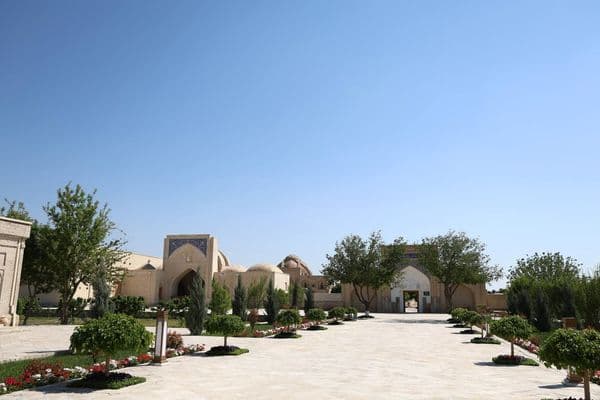
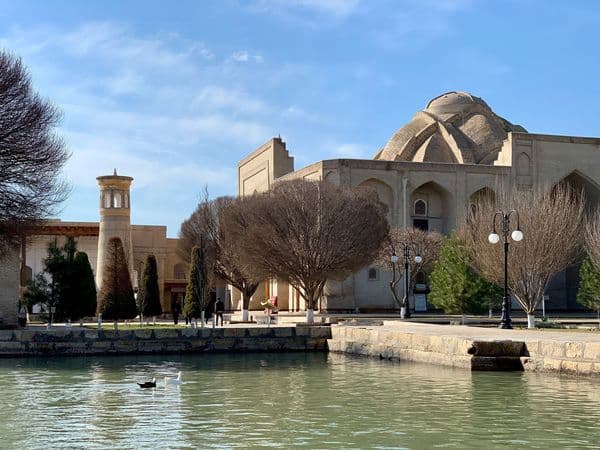
Khiva is the best-preserved oasis city of the Silk Road: inside the walls of Ichan-Kala, a UNESCO World Heritage Site, every street is a museum. This is a full guided walking day through its madrasahs, minarets and palaces.
Highlights include the Muhammad Amin Khan and Muhammad Rahim Khan madrasahs, the unfinished turquoise Kalta Minor minaret, Kunya Ark citadel and the Zindan museum, the Pakhlavan Mahmud Mausoleum, the Juma Mosque with its forest of carved columns, the Islam Khoja minaret, the Allakuli Khan madrasah and caravanserai, and the Tash Khauli Palace with its famous harem courtyard. Free time at leisure after the tour.
A town inside a wall
Ichan-Kala is a complete walled town, preserved whole rather than in fragments. You enter through a gate and everything is inside: madrasahs, minarets, palaces, mosques and the houses between them.
The scale is what surprises people. It is small enough to cross on foot without effort and dense enough that you keep finding courtyards you walked past earlier without noticing.
The walls themselves are worth climbing where access allows. From above, the town reads as a single object, and the relationship between the buildings becomes clear in a way it never is from the streets.
Nothing here is far from anything else, which means the day is unhurried by nature rather than by design. This is the one great city where the itinerary does not have to fight the geography.
The argument about Khiva
Some travellers find it a museum rather than a town, and they have a point worth taking seriously. Restoration here has been thorough, the resident population inside the walls is small, and much of what is inside now serves visitors.
The counter-argument is that the alternative was ruin, and that a preserved whole teaches you more about how such a town worked than scattered survivors elsewhere can.
Our own view is that Khiva is worth the journey and that the criticism should not be hidden from you. Travellers who arrive knowing it enjoy the place; travellers who discover it feel sold something.
What is not in dispute is the tilework. The turquoise here is a different register from Samarkand or Bukhara, and the unfinished minaret is one of the strangest and best things in the country.
What the day covers
The Kalta Minor minaret, squat and brilliantly tiled, abandoned unfinished when the ruler who commissioned it died. It is the image most people carry away.
Kunya Ark, the citadel, with its throne room and the summer mosque, and the Zindan alongside it — a jail museum that is bleaker and more informative than most visitors expect.
The Juma Mosque, whose forest of carved wooden columns is unlike anything else on the Silk Road. It is dim, cool and quiet, and it is the site people linger in longest.
Tash Khauli palace with its harem courtyards, the Pakhlavan Mahmud mausoleum, and the madrasahs of Muhammad Amin Khan and Muhammad Rahim Khan.
And the walking between them, which in Khiva is not connective tissue but part of the point.
Getting here
Khiva is the hardest of the four great cities to reach, and there is no way around that. It sits far to the west, and every route to it is a commitment.
Most travellers fly into the region and see Khiva at the start or end of a wider journey. Others arrive overland across the desert from Bukhara, which is a serious drive and one of the best things in the country.
This walking day assumes you have already made that journey and are staying nearby. It is not a day trip from anywhere in the useful sense of the phrase.
If you are weighing whether Khiva is worth the detour: it is, provided you have the room for it. Squeezing it into a schedule that cannot hold it is how people end up disappointed by a place that deserved better.
Practical notes
Everything is on foot and the surfaces are old brick and stone, uneven in places. There are steps and some climbs, particularly on the walls and the minaret if you go up.
Shade inside the walls is limited and the town holds heat. In warm months the middle of the day is best spent inside the mosques and madrasahs, which are markedly cooler.
Modest dress at the religious sites. Khiva is used to visitors and nobody will be difficult about it, which is precisely why the courtesy matters.
A single ticket covers most of the sites inside the walls, and your guide handles it. There is nothing to queue for individually.
When to come
Spring and autumn are ideal, with usable light and comfortable walking. This is when most people come and the walls have visible crowds at the main gates.
Summer in Khiva is severe. The town sits near the desert and the heat is dry and heavy. The day still works with an early start and a long indoor middle, and the town is very quiet.
Winter is cold, clear and nearly empty, and the tilework against a low sun is the version photographers want. Some interiors close or reduce hours.
Early morning inside the walls, before the day groups arrive, is the best hour Khiva has. If you are staying nearby, walk in before breakfast — it costs nothing and it is the memory people keep.
What to do with the rest of your time here
The walled town is the reason to come, but the region around it rewards an extra day for anyone who has one.
The desert fortresses of ancient Khorezm lie out towards the northwest — ruined mud-brick citadels on empty ground, and a completely different register from the restored town.
The Amu Darya is close, and the landscape around it is unlike anywhere else on our routes: flat, irrigated, and worked in ways that have not changed much.
Most travellers pair Khiva with the desert crossing to Bukhara rather than staying longer here, and that is a reasonable choice. If you do stay, the fortresses are what to stay for.