Silk Road Classics
The headline route through Samarkand, Bukhara and Khiva.
This is the route people mean when they say they are going to Uzbekistan: Samarkand, Bukhara and Khiva, with Tashkent at one end and the desert in between. It is the classic for a reason — three cities that were each, at different times, among the most important places in the world, and that still stand well enough to show it.
What the collection covers is the same journey at three lengths. The shortest keeps to the three great cities; the middle one adds a day in the mountains; the longest adds the fourth city and a flight over the Kyzylkum. The stops overlap; the difference is how much room you leave yourself in each place.
What the route actually is
The Silk Road was never one road. It was a web of routes carrying goods, ideas and religions between China and the Mediterranean, and the cities that grew on it were the places where those routes converged — where caravans changed hands, where money was exchanged, where scholars stayed because there was an audience.
Uzbekistan holds the densest surviving concentration of those cities. That is the practical reason this route exists: nowhere else can you cross four of them in one trip on good roads and fast trains, with the monuments still standing rather than excavated.
The four cities and what each adds
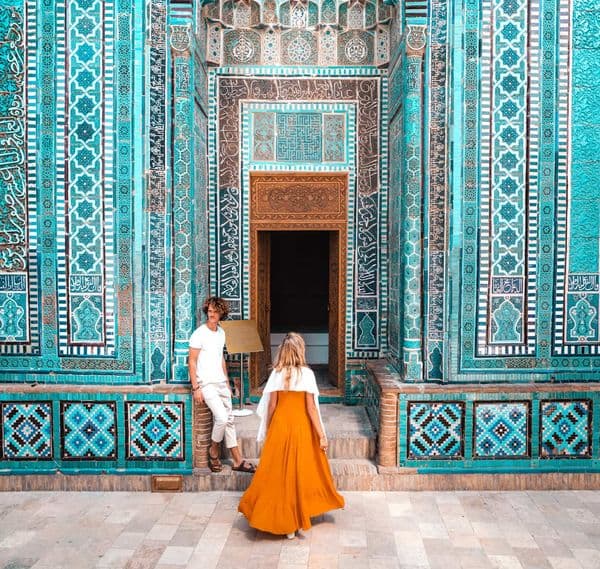
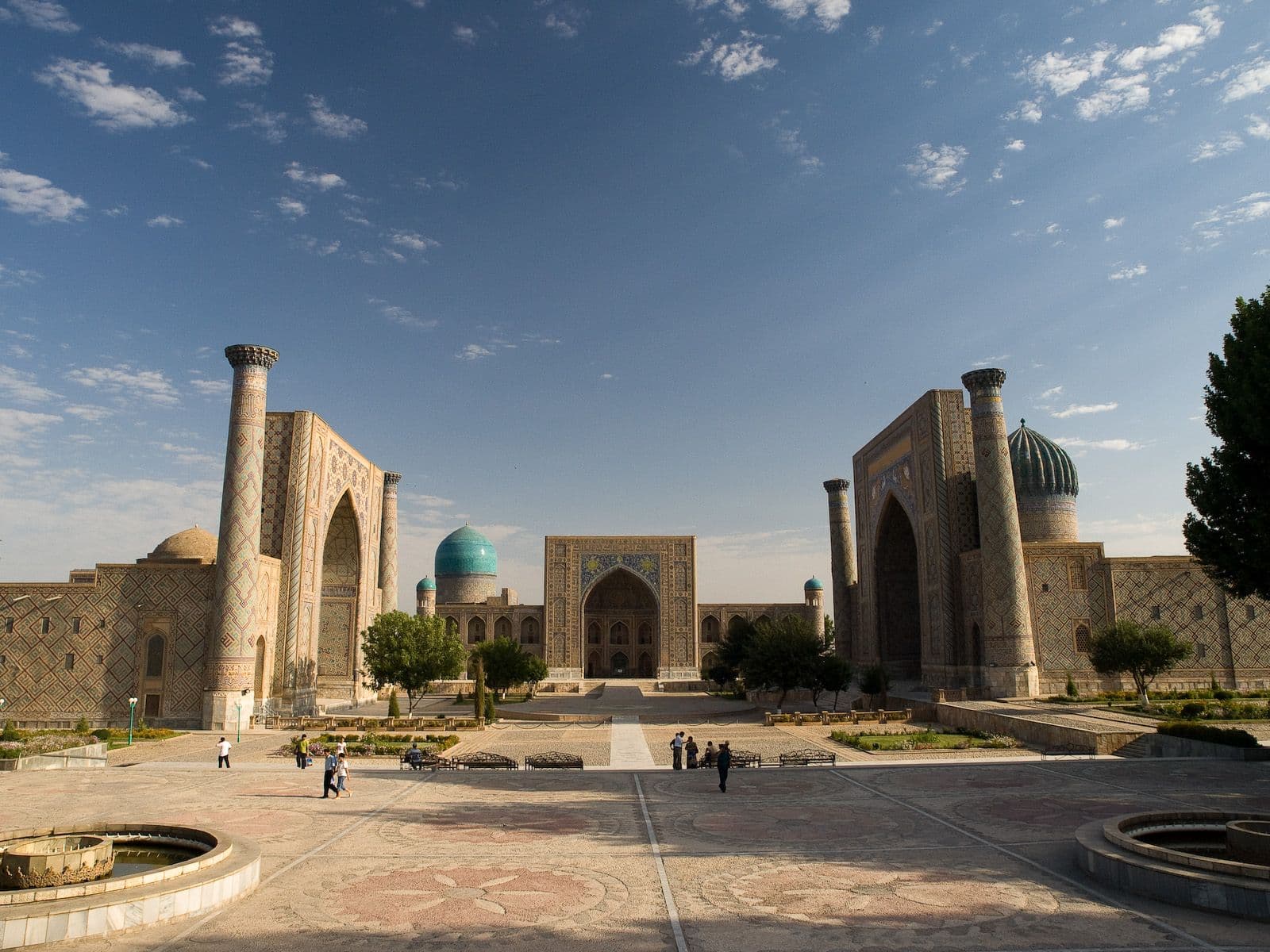
Samarkand is the grand one — Timurid ambition at full scale, turquoise domes and portals built to impress ambassadors. It is the city people photograph and the one that photographs best.
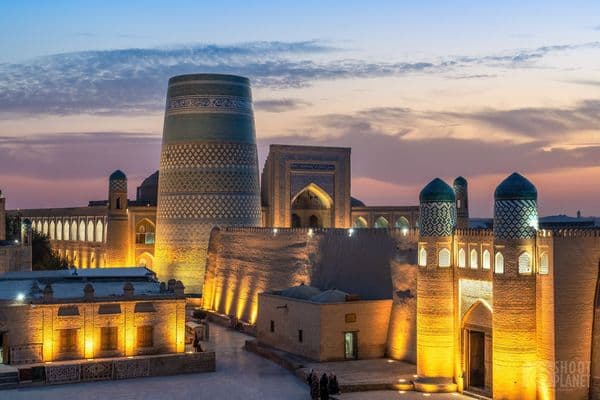
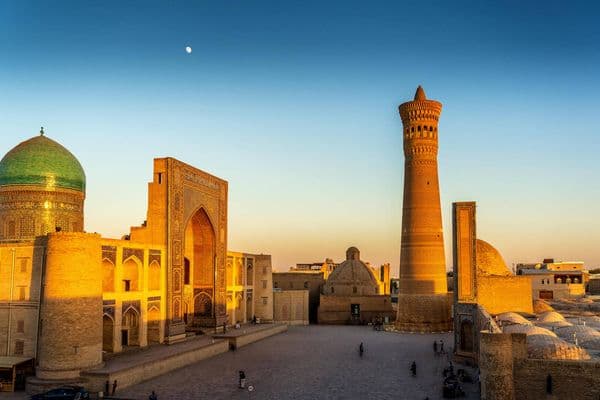
Bukhara is the opposite temperament: a whole old town rather than a set of monuments, dense and walkable, where you turn a corner into a minaret instead of approaching it across a square. Khiva is a walled city, compact and complete, best at either end of the day. Tashkent is the modern capital and the arrival point, and it earns its own day more often than itineraries allow it.
How the route is travelled
Between Tashkent, Samarkand and Bukhara there are high-speed trains, and they are the reason this route is comfortable rather than gruelling. They are clean, punctual and considerably more pleasant than driving the same distance. Seats sell out in the high season, which is the single strongest argument for booking a trip like this in advance rather than assembling it on arrival.
West of Bukhara the railway gives way to the desert, and the leg to Khiva is either a long drive across the Kyzylkum or a short flight. Both are covered in the longer itineraries. The drive is emptier than most travellers expect and is usually broken with a stop — which is how the yurt camps and the desert fortresses end up in a Silk Road trip.
Choosing between the itineraries
The shortest of the three keeps to the classic triangle and moves at a steady pace: enough time in each city to see the main ensembles without rushing, not enough to wander far off the main streets. It suits a first visit where the monuments are the point.
The middle itinerary adds a mountain day north-east of Tashkent, which changes the rhythm of the trip more than its length suggests — a day of air and water between three cities of brick. The longest adds Khiva and therefore the whole of Khorezm, and it is the one to choose if you want the full arc rather than a highlights reel.
When to go
Spring and autumn, without much argument. Spring brings blossom, green plains and comfortable walking weather; autumn brings the harvest, warm days and cool evenings, and the light that photographers come for. Both are busy, and both are worth booking early.
Summer is genuinely hot on this route — the cities are on plains and in deserts, and the middle of the day empties the streets. It is workable if you start early and rest at midday, the way locals do. Winter is cold, sometimes with snow on the domes, and the monuments stand almost empty. Some travellers prefer it for exactly that reason.
What to know before booking
Distances between cities are real, and the itinerary decides how much of the day goes into moving. Trains help; the desert leg does not. Look at where the nights are rather than at the total length, because a trip with the same number of days can give you two afternoons in Bukhara or four.
Everything in this collection runs privately: your own guide and vehicle, your own pace, and the option to change the plan on the day. If you would rather join a group, or if you want to build something that is not on this list, say so when you write — most of what we run is assembled rather than picked off a shelf.
One more thing worth saying plainly. This is the busiest route in the country, and in spring and autumn the good hotels inside the old towns of Bukhara and Khiva fill well ahead. Booking late rarely means paying more; it means staying further from the old town than you wanted, which on a trip built around walking old towns is the wrong compromise to make.