Pilgrimage & Ziyarat
The shrines of the Naqshbandi masters, travelled the way pilgrims travel them.
Ziyarat is the visiting of holy places, and in Uzbekistan it is not a historical practice — it is a living one. The shrines around Bukhara draw pilgrims from across Central Asia and far beyond it, and on a Friday the courtyards are full of people who came to pray rather than to look.
These journeys follow that route rather than the tourist one. The buildings overlap with what a cultural itinerary would show you, but the order, the pace and the emphasis are different, and so is the company you keep along the way.
What ziyarat means
The word means visitation. In practice it is a journey to the resting places of people regarded as spiritually significant — teachers, saints, founders of orders — undertaken to pay respect, to ask for intercession, or simply to sit somewhere that generations have found worth sitting in.
It is not a substitute for the hajj and is not treated as one. It is closer to the older, quieter idea of travelling to be near something, and the shrines reflect that: they are places to spend time in rather than sights to tick off, and the buildings are often modest compared with the great madrasahs a short drive away.
Central Asia has kept this practice more continuously than most of the Islamic world, and Bukhara sits at the centre of it. Through the last century the shrines stayed in use even when that was discouraged, and the tradition passed down through families rather than institutions. What you see today is therefore continuous, not revived — a distinction that matters more the longer you spend in these courtyards.
The Naqshbandi tradition
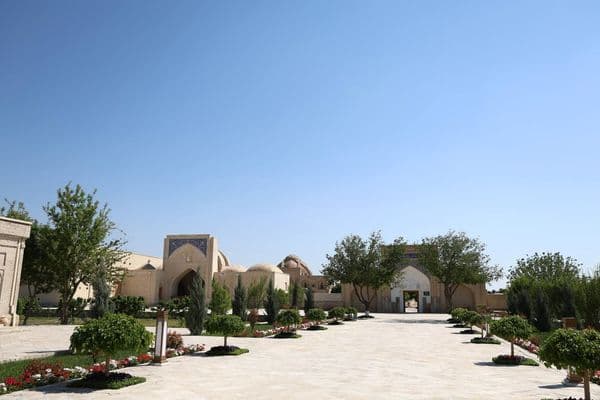
Bahauddin Naqshband gave his name to one of the most widespread Sufi orders in the Islamic world, and his shrine outside Bukhara is the centre of it. The order is known for a particular emphasis — remembrance practised silently, and spiritual life carried on inside ordinary work rather than apart from it.
That emphasis explains why the complex feels the way it does. There is no grandeur competing for attention; there is a courtyard, a mosque, a cemetery and a great many people moving quietly through them. For visitors who came to Uzbekistan for architecture, it is often the place that lands hardest.
The seven pirs of Bukhara
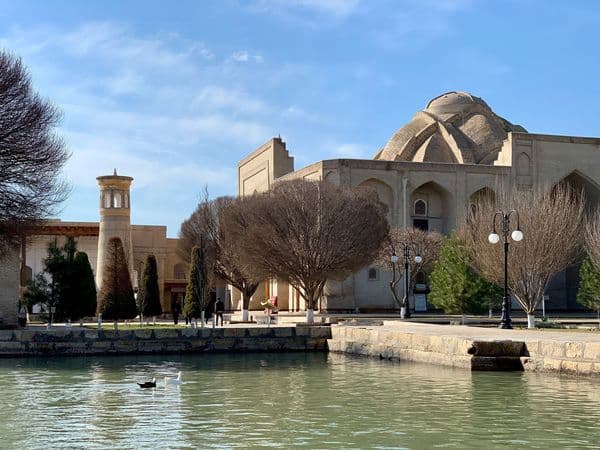
The longer of these journeys follows the chain of seven masters of the Naqshbandi line, whose shrines lie scattered around Bukhara — some in the city, some in villages, some out where the irrigated land gives way to steppe. Pilgrims traditionally visit them in order, and the sequence is the point.
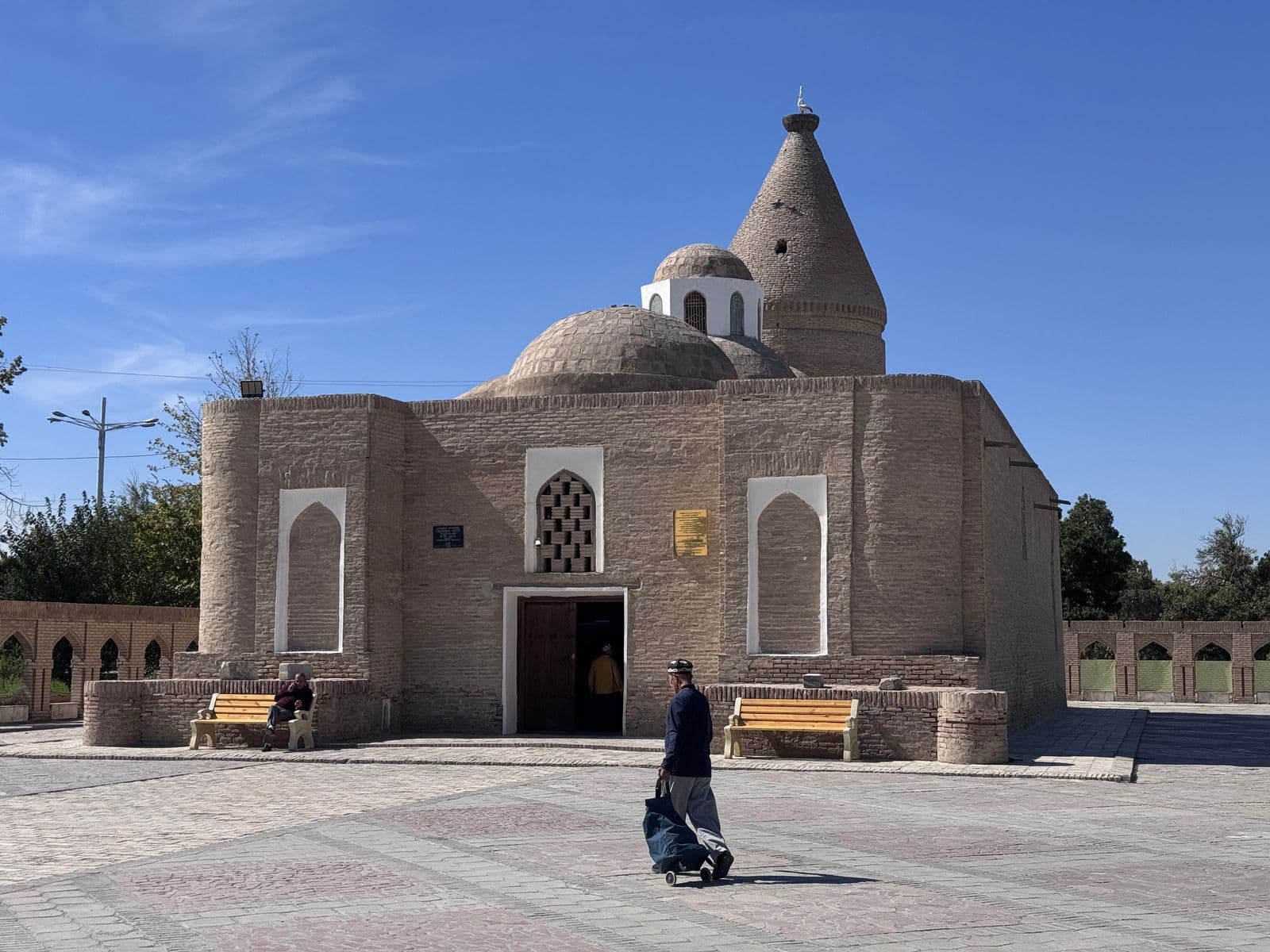
Travelling it takes you through country most visitors never see: farming villages, small cemeteries, roadside tea houses, and the ordinary landscape between the famous places. The shrines themselves range from substantial complexes to a single domed chamber in a field.
The shorter journey takes the Naqshband complex itself with a night in Bukhara, reached from Tashkent by fast train. It suits travellers who want to make the ziyarat properly without rearranging a whole trip around it, and it is the one most often added to an itinerary that already exists.
How a ziyarat is travelled
The practical shape is a car, a driver and a guide who knows both the roads and the etiquette. Distances between shrines are small but the roads are rural, and finding several of them without help is genuinely difficult.
At each stop the pattern is the same: enter quietly, keep to the side, let the people who came to pray have the space they came for. Photography is usually fine outside and often not inside; ask rather than assume. Dress covered — long sleeves and long trousers or a skirt, and a headscarf for women at the shrines themselves.
When to go
Spring and autumn are the comfortable seasons, as they are everywhere on this side of the country. The shrines are outdoor places, largely unshaded, and the walking between the parts of a complex adds up.
The end of the week is when the shrines are busiest and most alive, and that is a reason to go rather than to avoid it — the atmosphere is the point. If you would rather have the quiet, the first hours after opening on any other day give you an almost empty courtyard.
Who this suits
Muslim travellers making the ziyarat properly, obviously — and this is the majority of who we take. But these routes also suit anyone interested in Sufism, in living religious practice, or simply in seeing a side of the country that the standard itinerary drives past.
What we ask in return is straightforward: these are working places of worship, not attractions, and the people around you are not part of the scenery. Come with that in mind and you will be made welcome, which in this part of the world is a considerable thing.
A few practical notes. There is no charge to enter the shrines, though donation boxes are present and used. Shoes come off where carpet begins. The end of the week is the fullest and the one to aim for if you want to see the practice rather than the buildings; if you are travelling with children, mornings are easier than afternoons.