Desert & Trekking
Kyzylkum dunes, yurt camps and mountain trails.
Uzbekistan is thought of as a country of cities, and the cities deserve it. But the same country has a serious mountain range along its north-eastern edge and one of the great deserts of Central Asia in its middle, and both are reachable from the places you were going anyway.
This collection is the outdoor half of the country: alpine lakes in a national park, a reservoir under snow-capped ridges, dunes and open steppe. None of it requires technical skill. All of it requires the right shoes and a willingness to be out of the car.
Two landscapes, not one
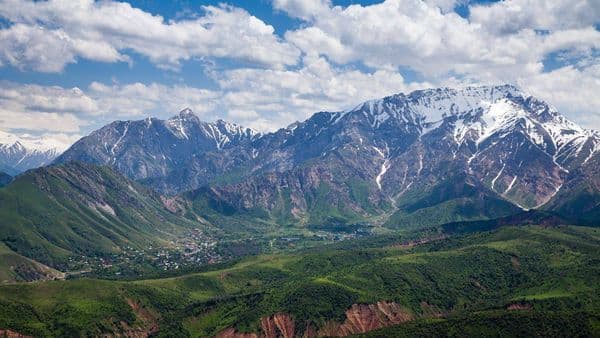
The mountains are the western end of the Tien Shan, and they behave like proper mountains: fast weather, cold rivers, snow into early summer and valleys that feel a very long way from anywhere despite being close to the capital. Juniper and walnut on the lower slopes, alpine meadow above, bare rock on the tops.
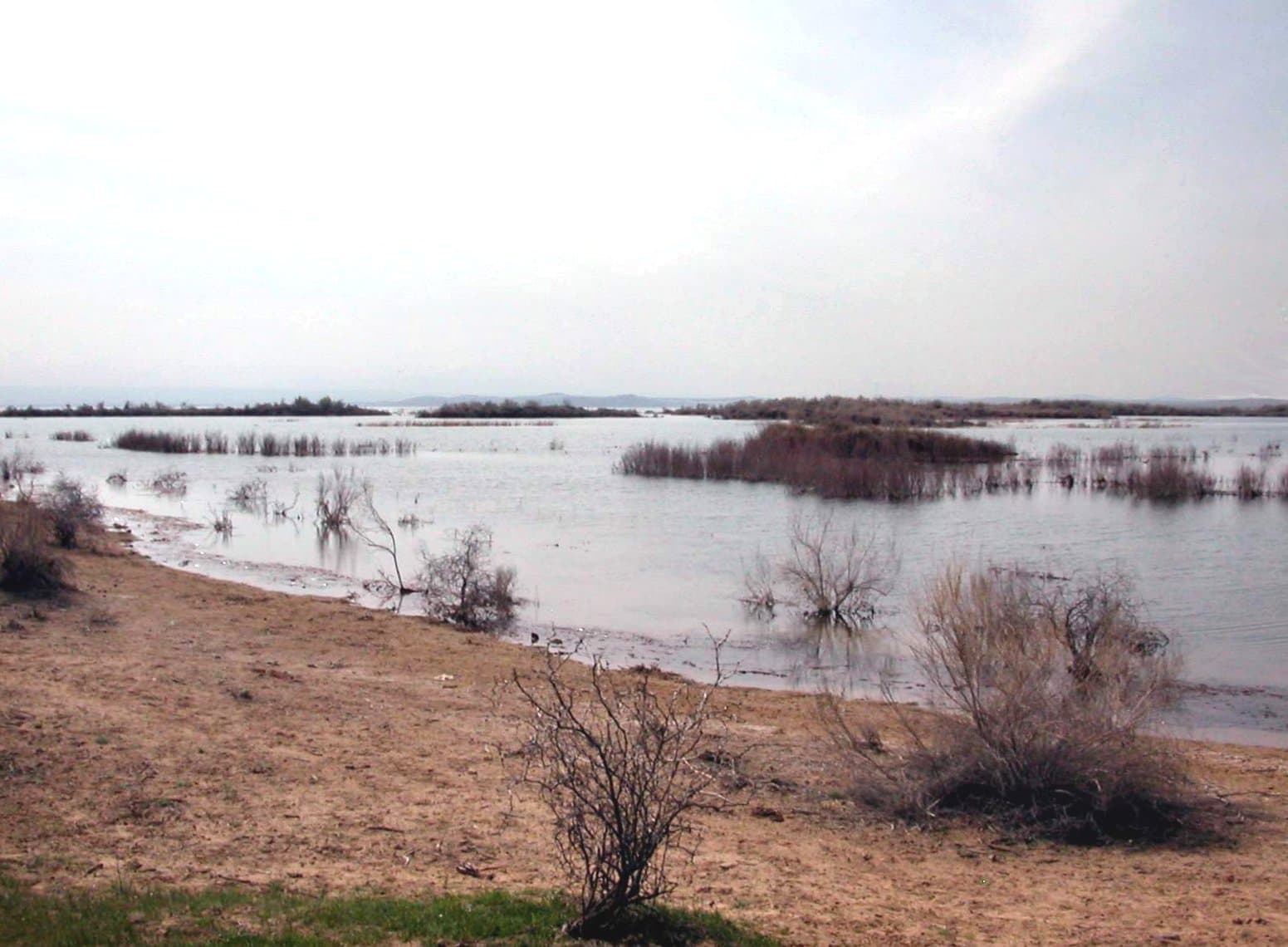
The desert is the Kyzylkum, and it is not the sand sea of the photographs. Mostly it is low dunes held together by scrub, salt flats and grazing land, with the horizon doing all the work. The two landscapes are about as different as two halves of one country can be, and seeing both is part of the point.
The lakes of Ugam-Chatkal
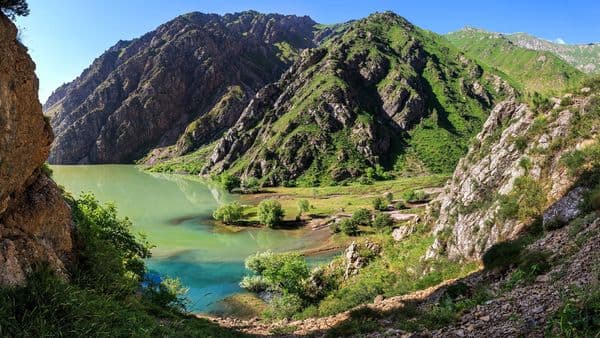
Urungach is the destination people come back talking about: two lakes in a rock cirque at the head of a valley, coloured a saturated blue-green by mineral suspension in the meltwater. The colour is strongest in early summer and depends on the light, which is why the timing of the day matters as much as the season.
Getting there means a jeep track and then a walk — straightforward, unmarked, and steeper on the second half. The park around it is the largest protected mountain area in the country and holds wild fruit forest, ibex and a long list of raptors. Some zones need permits, which is one of several reasons to go with someone who knows the current situation.
Weekends in season bring a crowd to the lower lake, and the upper one thins it out quickly. Going on a weekday changes the day completely: the same walk, the same colour, and almost nobody on the path. That single choice matters more here than anything else you can decide in advance.
Chimgan and Charvak
Closer to Tashkent, the Chimgan massif and the Charvak reservoir make the easier of the two mountain days. A cable car takes you up for the view, there are ridge walks of any length you like, and the reservoir below is a strong turquoise that surprises people who came expecting desert.
In summer the water is warm enough to swim and the shore is busy at weekends. In winter the same slopes carry a ski season. For a traveller with one spare day and no wish to commit to a trek, this is the version that gives you mountains without the logistics.
What to bring
Shoes with grip, more water than you think, and something warm regardless of the forecast on the plain. Altitude changes the temperature faster than the season does, and a valley loses its heat the moment the sun leaves it.
Sun protection matters more here than the temperature suggests, in the mountains as much as the desert. If you are going to the lakes, expect at least one river crossing on foot in the melt season and plan your footwear accordingly. Nothing on these routes needs equipment you would have to buy specially.
Seasons
The mountain window runs from late spring to early autumn. Late spring and early summer give the strongest water and the best lake colour but the hardest crossings; the second half of summer is drier and easier underfoot; early autumn is stable, quiet and the connoisseur’s choice.
The desert is at its best in spring, when the steppe greens briefly and the nights are cold enough to want a stove, and in autumn when it is dry and clear. High summer is severe in both landscapes for opposite reasons, and winter closes most of the mountain routes while opening the ski season on the accessible slopes.
Combining with the cities
The easiest combination is a mountain day out of Tashkent at the start or end of a classic route — the capital is where the flights land, and the range is close enough that it costs you a day rather than a leg of the trip.
The desert combines differently: it sits between Samarkand and Bukhara, so a night in a yurt camp breaks a long transfer instead of adding to the itinerary. Travellers who do both usually say afterwards that the change of pace was what made the trip, rather than any single sight in it.
One honest caveat. These are not wilderness expeditions. The mountain days are guided day walks with a vehicle waiting at the road head, and the desert nights are in furnished yurt camps with meals cooked for you. Multi-day trekking with camping at altitude exists in this country, but it is a different kind of trip and needs building rather than picking off a list.