
The Fergana Valley: Uzbekistan’s Craft Heartland
Off the standard Silk Road loop, the Fergana Valley is where Uzbekistan’s silk, ceramics and knives are still made by hand. Here is why it’s worth the detour.
Why visit the Fergana Valley
East of Tashkent, the lush Fergana Valley is the cradle of Uzbek craft and a greener, more agricultural counterpoint to the desert cities. It sees far fewer tourists, so the workshops feel authentic rather than staged — this is where to come if you want to meet makers, not just buy souvenirs.
Margilan — the silk capital
Margilan has woven silk for over a thousand years. At the Yodgorlik factory you can follow the whole process — from silkworm cocoon to hand-dyed ikat (adras) — done the traditional way with natural dyes and wooden looms. The bustling Kumtepa bazaar nearby is one of the most colourful in the country.
Rishtan ceramics
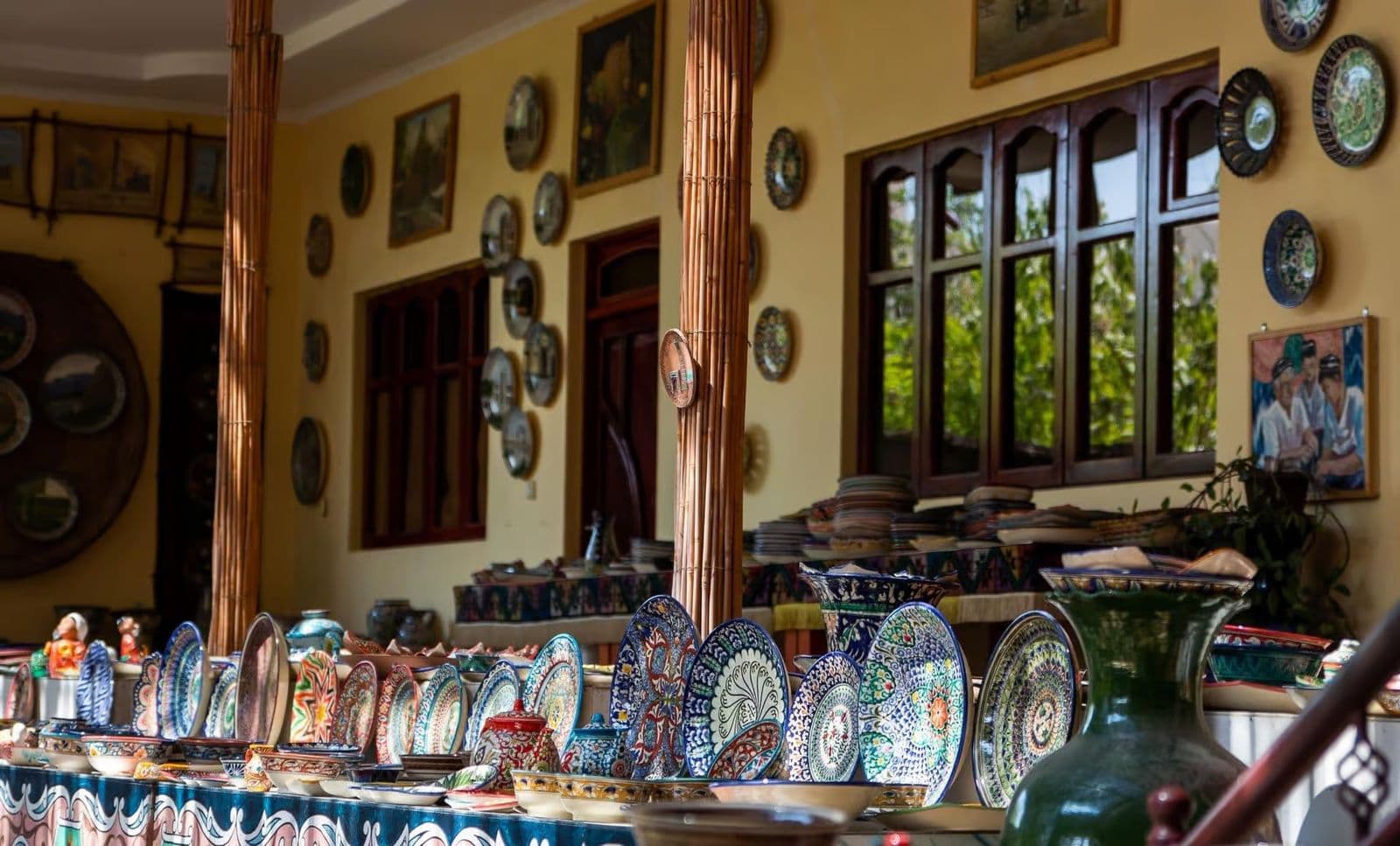
Rishtan is the home of Uzbekistan’s famous turquoise-and-blue pottery, glazed with natural “ishkor” minerals. Visit a master’s workshop to watch plates and bowls thrown, painted and fired, then buy straight from the source — characterful, and a fraction of city prices.
Kokand, Chust and the wider valley
Kokand’s Khudayar Khan palace is a riot of painted ceilings and tilework; Chust is known for its distinctive pocket knives and skullcaps. The valley rewards a slow day or two of workshop-hopping between towns, ideally with a guide who can translate and make introductions.
Adding Fergana to your trip
Fergana is a there-and-back loop from Tashkent — a scenic drive over the Kamchik pass — so it adds two to three days. We build it in for travellers who love craft and want to go beyond the classic route; tell us and we’ll weave it in.
Tell us what you’re thinking and we’ll send a tailored plan.