
Nurata & Aydarkul
A first look
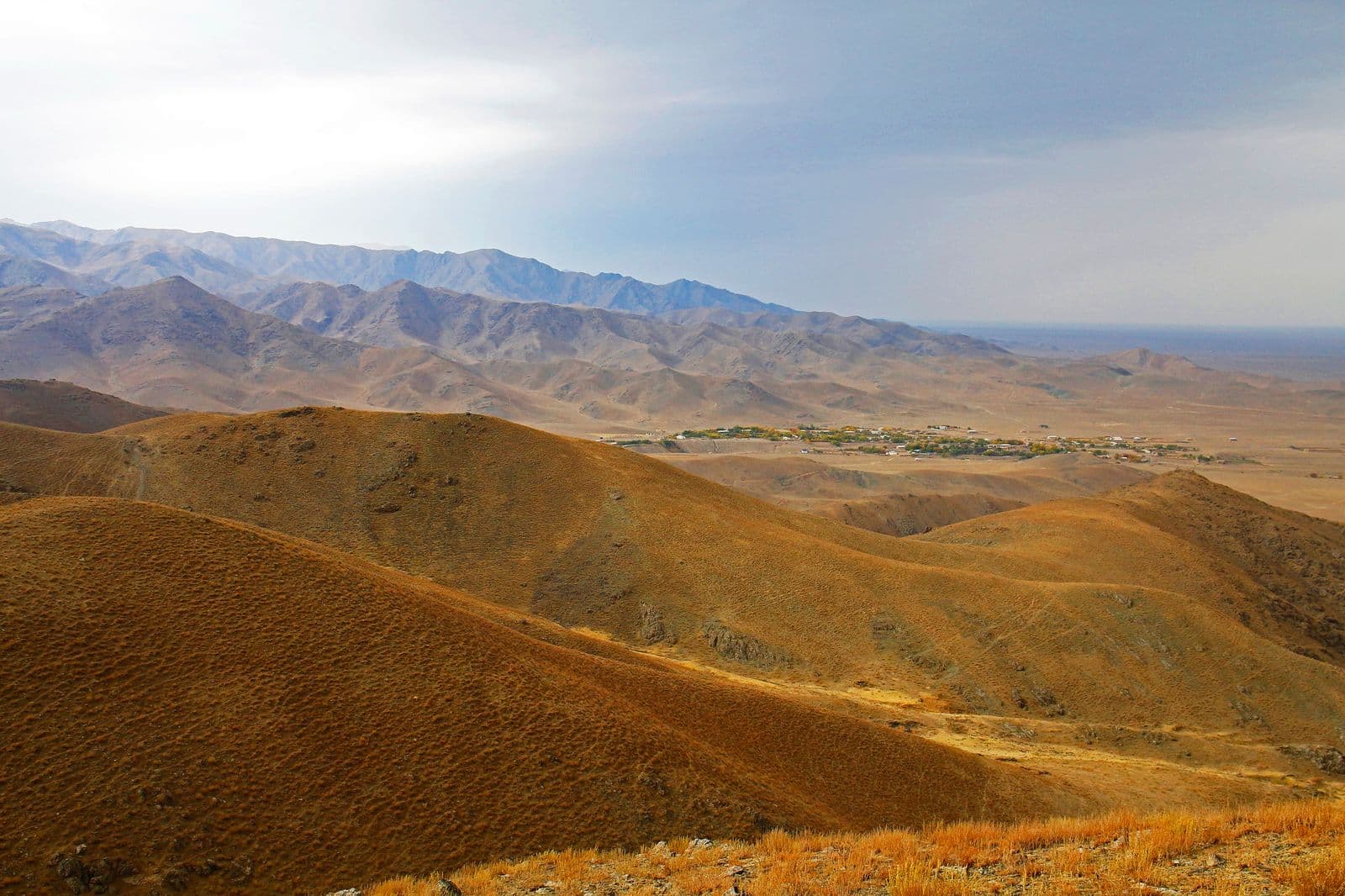
This is where the green country stops. South-west of the Nurata ridge the fields give out, the road runs into open sand, and the Kyzylkum begins in earnest. The appeal of the place is precisely that transition — you can stand with irrigated orchards behind you and dunes ahead of you.
Most people come for one night in a yurt camp beside Aydarkul, and most people are glad they did. It is the one stop on a Silk Road route that is not about architecture at all.
What to see
Where the green ends
The Nurata mountains run in a low dry ridge between the fertile land to the south-east and the desert to the north-west, and everything about the area follows from that. Springs come out of the rock at the foot of the range and have supported a settlement for as long as anyone can say; the fortress ruins above the town are traditionally credited to Alexander.
Below the ridge the land is stony steppe that turns briefly green in spring and burns off by summer. Further out it becomes proper sand — low dunes held together by scrub, empty in every direction, with the horizon doing what horizons do in flat country.
The lake in the sand
Aydarkul is the surprise. A long shallow body of water sitting in the middle of the desert, it is not ancient: it formed in the last century when floodwater was released into a depression and never fully drained away, and it has since become a working fishery and a stop for migrating birds.
The effect is strange and worth seeing — turquoise water and a sand beach, dunes running down to the shore, and no development in sight. You can swim in the warm months. The light at either end of the day is the reason photographers make the trip at all.
What there is to do
Camels are the main event, and they are the real thing rather than a photograph prop: a slow ride out over the dunes, ideally in the late afternoon when the sand goes orange and the shadows stretch. It is uncomfortable in the way riding a camel is always uncomfortable, and everyone does it anyway.
Beyond that — walking out into the sand with no path, swimming or fishing in the lake, visiting the springs and the fortress mound at Nurata, and doing very little. The point of this place is the absence of a programme, which is exactly what it offers after a run of cities.
The Nurata side of the trip deserves time of its own. The springs feed a pool of sacred fish below the ruined fortress, the Friday mosque beside it has stood on the same spot for a very long time, and the village around them still works as a village rather than as a stop. It is a useful corrective if the camps begin to feel arranged.
A night in a yurt
The camps are clusters of felt tents on wooden frames, furnished with mattresses on the floor and a stove for the cold months. They are simple: washing facilities are shared and basic, and nobody pretends otherwise. What you get in exchange is the reason to be there at all.
Dinner is cooked over fire and eaten together, usually with a singer and a two-stringed dutar, and it is less staged than it sounds. Then the fire dies down and the sky does the rest. There is no light for a very long way in any direction, and the number of stars overhead is the thing people remember from the whole trip.
Bring something warm whatever the month. The desert loses its heat as fast as it gains it, and the gap between the afternoon and the small hours is wider than anyone expects on a first visit. The camps hand out extra blankets without being asked, which tells you how often this comes up.
Seasons in the desert
Spring is the best time by a wide margin: the steppe greens up, tulips come out on the stony ground, the days are warm and the nights are cool enough to want the stove lit. Autumn is nearly as good — dry, clear, with the lake still warm enough to swim in the early part of it.
Summer is punishing. The camps operate, but the middle of the day is spent in shade and the appeal drops sharply. Winter is cold, windy and usually overlooked; a yurt with a lit stove under a hard clear sky is a genuine experience, though it is not what most people picture when they book.
Where it fits in a route
This is the classic way to break the long stretch between Samarkand and Bukhara. Rather than crossing the whole empty distance in one go, most itineraries turn north to Nurata, spend the night at the lake and rejoin the road the following day.
It works in either direction and it changes the rhythm of a trip that would otherwise be four cities of tilework in a row. Travellers who add it almost never regret it; travellers who skip it usually hear about it later from someone who did not.
No payment now. We reply with a tailored plan within a few hours.