
Nukus & Moynaq (Karakalpakstan)
A first look
This is the strangest corner of the country and, for many travellers, the one that stays with them longest. Karakalpakstan is a republic within Uzbekistan, with its own language, its own flag and a landscape running from irrigated delta to open salt desert. Its capital, Nukus, holds one of the most improbable art collections anywhere.
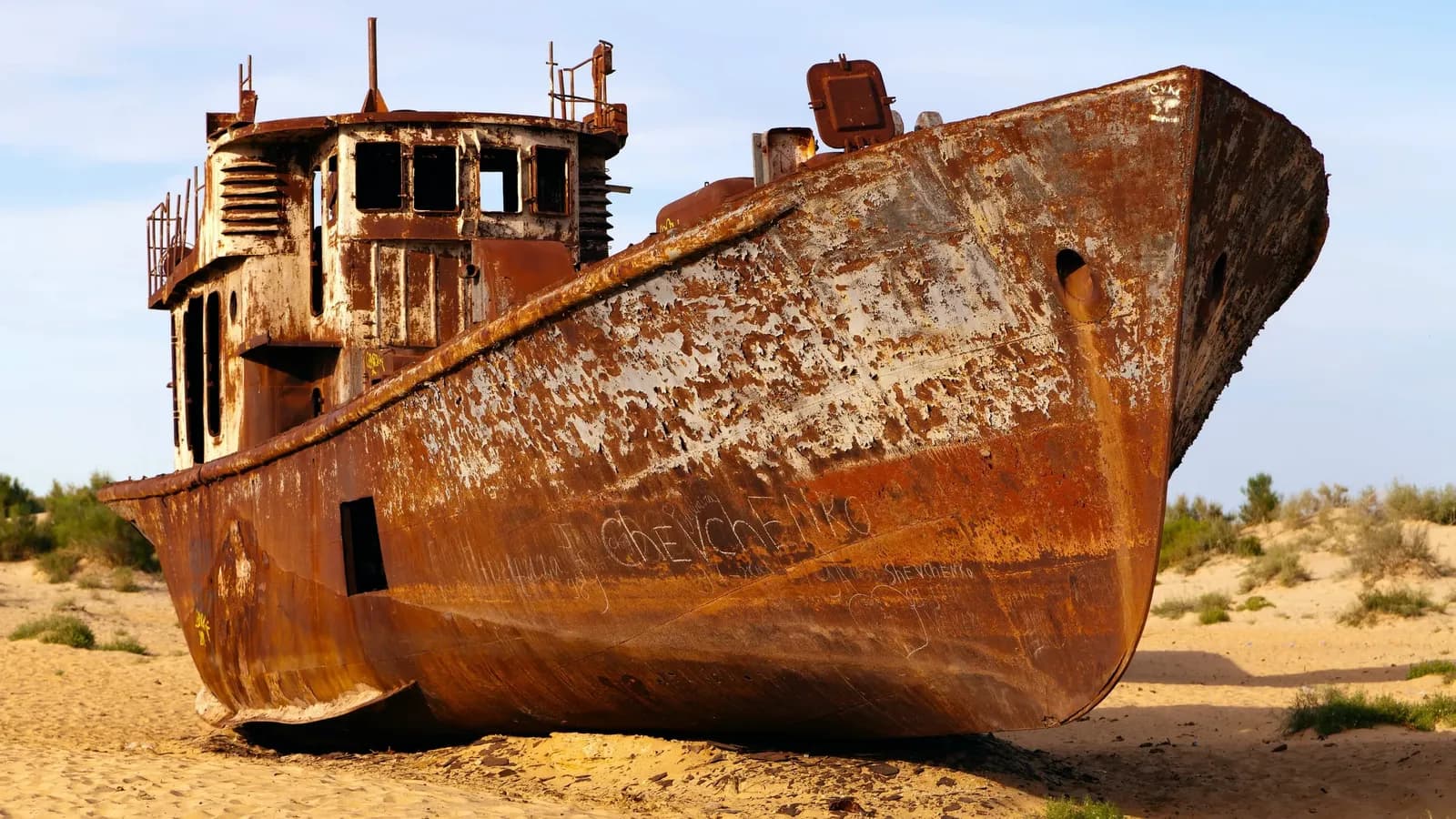
North of it, Moynaq was a fishing port until the sea it fished went away. What is there now is a line of rusting hulls on dry ground and a horizon where the water used to be. Neither place is comfortable, and both are worth the journey.
What to see
A republic of its own
The Karakalpaks are a distinct people with a language closer to Kazakh than to Uzbek, and the territory has its own history as a delta society dependent on the Amu Darya. That dependence explains everything that followed: when the river was diverted upstream for cotton, the delta and the sea it fed were the ones that paid.
The landscape here is not the tourist desert of yurt camps and dunes. It is flat, saline, hard country, and the towns are Soviet in plan and appearance. Travellers expecting the tiled cities of the Silk Road find nothing of the sort, which is exactly why the region is worth the detour.
Karakalpak culture deserves attention on its own terms. The yurt here is built differently from the Kazakh one, the embroidery keeps to a distinct palette, and the tradition of epic recitation is still performed rather than archived. The regional section of the Nukus museum covers all of this alongside the paintings, and it is the part most visitors skip and later wish they had not.
The Louvre in the desert
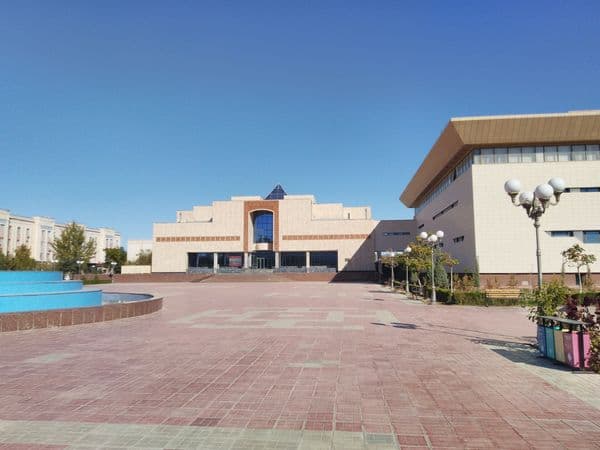
The Savitsky Museum is why most people come to Nukus. Igor Savitsky, an artist and collector, spent decades acquiring Russian and Uzbek avant-garde work that could not be shown or safely stored elsewhere, and he brought it to a provincial museum far enough from the centre that nobody looked closely.
The result is a collection of banned and forgotten painting on a scale nobody would predict from the building. Alongside it sit Karakalpak folk art and archaeology from the region, which supply the local context the paintings need. Allow longer than you think: this museum rewards a slow second circuit more than a fast first one.
Moynaq and the sea that left
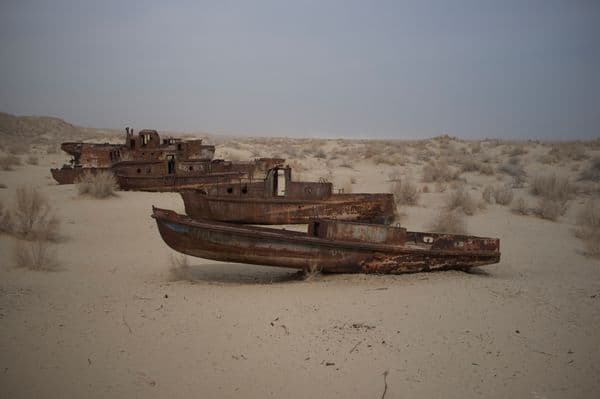
Moynaq was a port. Boats worked out of it, a cannery employed the town, and the shore lay at the edge of the settlement. The Aral has since retreated far enough that the old coastline is a bluff above a plain of salt scrub, and the ships left behind sit on the bed in a row.
It is a short, quiet visit and an unusually direct one. There is a memorial on the bluff, a small museum, and the hulls below. What makes it land is the emptiness in front of you and the knowledge that all of it was water within living memory. Nobody stages this well, and it does not need staging.
Mizdakhan and the older desert
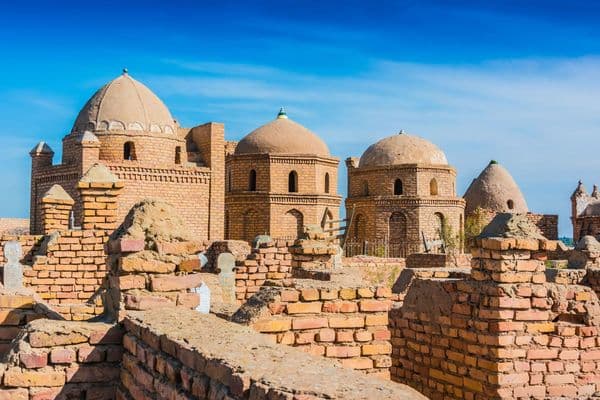
Outside Nukus the necropolis of Mizdakhan covers a set of low hills with tombs of many periods — some underground, some half-buried — laid over ground that has been used for burial for a very long time. On the opposite hill stand the ruins of the fortress of Gyaur-Kala, older again.
The local tradition here concerns a slowly collapsing brick structure said to mark the age of the world, with visitors adding stones to hold it up. Whatever you make of the story, the place carries an atmosphere the more polished monuments elsewhere in the country do not.
Ustyurt and the far edge
North and west of the delta the Ustyurt plateau begins, and it is the emptiest terrain in Uzbekistan: chalk escarpments dropping away in white cliffs, flat tableland above, and no settlement for a very long way in any direction. The former shoreline of the Aral runs through it.
This is expedition country rather than sightseeing. Trips run out to the cliffs and the dried seabed with support vehicles and camping, and they need arranging in advance. For travellers who want landscape rather than architecture, there is nothing else in the country like it.
When to come and how it fits
Spring and autumn only. The summer is severe and the winter here is genuinely cold, with wind coming off the plateau and nothing to break it. The shoulder seasons are short, dry and clear, which is what this landscape needs to be worth the effort.
Nukus is reached by air from Tashkent or by road from Khiva, and the second is the usual pattern: Khiva first, then north for a night or two, then fly out. It adds days to a trip and changes its character completely. Travellers who came for tilework often say afterwards that this was the part they kept thinking about.
No payment now. We reply with a tailored plan within a few hours.