
Namangan & Aksikent
A first look
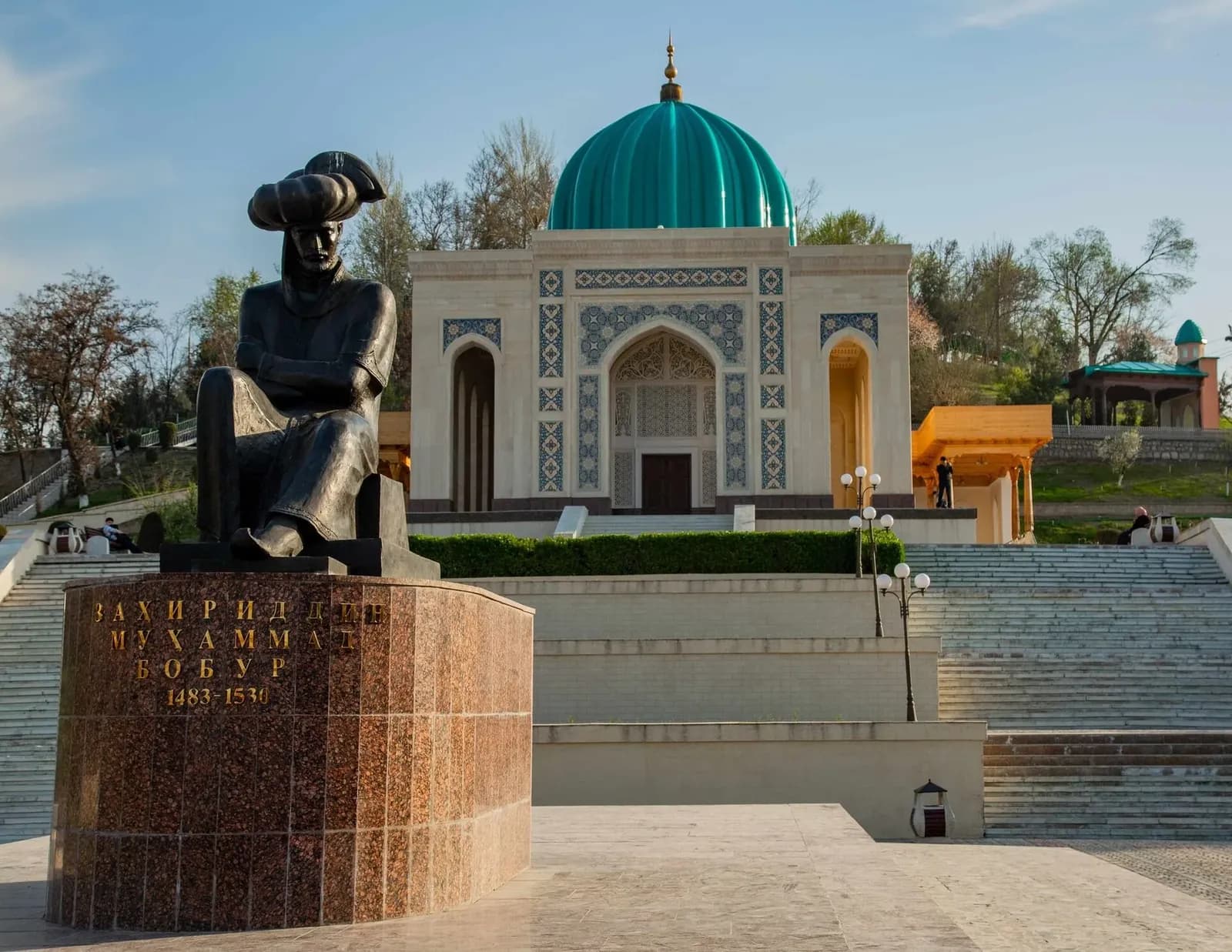
Namangan is the valley’s garden city, known across the country for its parks, its flowers and a distinct civic pride in both. It is also the base for Aksikent, the archaeological site of a capital that governed this region long before Kokand or Andijan mattered.
The combination is what makes the stop worthwhile: an afternoon among excavated walls above the Syr Darya, and an evening in a town that treats horticulture as a competitive sport.
What to see
A city of gardens
Namangan sits on the northern side of the valley where the water is reliable, and the city has leaned into that for as long as anyone can remember. The parks are large, well kept and genuinely used — families in the evening, chess and tea under the trees, and flowerbeds maintained to a standard that would embarrass most European municipalities.
A flower festival held in the main park draws growers from across the region and beyond, and the city rearranges itself around it. Even outside festival season the horticultural habit shows: nurseries on the edge of town, roses in front of ordinary apartment blocks, and a whole bazaar section given over to seedlings and cuttings.
Aksikent, the older capital
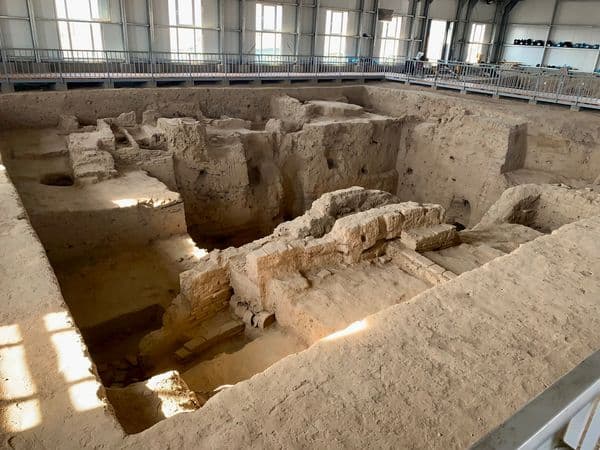
Before the khanates and before the Timurids, the political centre of this valley was Aksikent on the bank of the Syr Darya. It was a city with a citadel, a walled town and suburbs, it minted its own coins, and it was known across the Islamic world for steel — the crucible steel made here travelled a very long way.
The river and an earthquake between them finished it off. What is left is a large excavated site: ramparts, the outline of the citadel, kilns, and a museum on site that makes sense of what you are looking at. It is quiet, it is rarely visited, and it is the most important pre-modern site in the valley by a wide margin.
Bring water and something for the sun, because the site is exposed and there is no shade on the mound. A guide is worth arranging in advance: the excavation is large, the signage is limited, and the difference between walking across a field of earthworks and understanding what you are walking across is entirely a matter of having someone explain it.
The site museum is small but does the necessary work, laying out the finds — coins, ceramics, crucible fragments — that turn the earthworks back into a city. Go there first rather than last. Very little on the mound makes sense until you have seen what came out of it.
What is made here
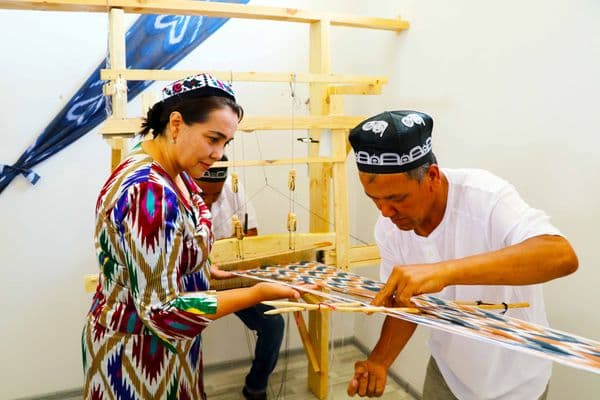
The district around Namangan keeps several crafts going. Uychi is the name to know: a craft complex where metal chasing, textile work and embroidery happen in one place, with masters who trained in the traditional way and are used to explaining what they are doing.
Pottery is made in the district too, in a style distinct from Rishtan — less turquoise, more green and brown, heavier in form. Skullcaps embroidered in the Namangan pattern are the small thing to buy: they are worn locally rather than sold as souvenirs, which is the best recommendation available. None of these workshops are set up for tour groups, so turning up unannounced is normal here and perfectly welcome.
The old town
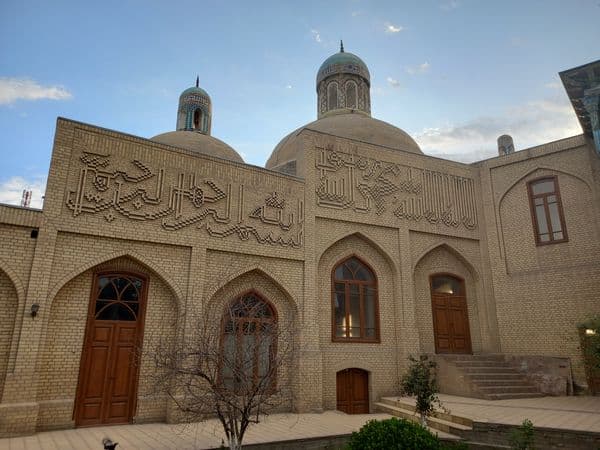
The Mullo-Kirgiz madrasah is the architectural piece worth seeking out. Built around the turn of the last century, it has an unusual facade — the geometry is not the standard madrasah arrangement, and the brickwork does things the classical tradition does not.
Around it the older quarters keep their courtyard houses and narrow lanes, with a scattering of mosques and mausoleums of various dates. None of it is on the scale of the western cities, and none of it has been cleared and landscaped, which means you walk through a town rather than around an exhibit.
When to go
Spring is the obvious answer in a city that markets itself on flowers, and it is the right one: the parks are at their peak and the whole valley is in blossom. Early autumn is the other good window, with the fruit harvest at its best and comfortable weather that holds for weeks.
Summer is hot, and the parks provide the shade the rest of the valley lacks. Winter is damp and grey, the gardens are bare, and Aksikent in the mud is hard work — this is the one season to plan around here.
Where it fits in a route
Namangan is on the northern arm of the Fergana loop, reached from Tashkent through the pass or from Andijan along the valley. It works well as the second or third stop, with Aksikent taking most of a morning and the city itself an easy afternoon.
Travellers who treat the valley as a craft trip sometimes skip Namangan in favour of Margilan and Rishtan. That is a reasonable call when time is short, but it means missing the only major archaeological site in the region, which is a poor trade if you have any interest in what was here before the khanates.
No payment now. We reply with a tailored plan within a few hours.