
Langar (Kashkadarya)
A first look
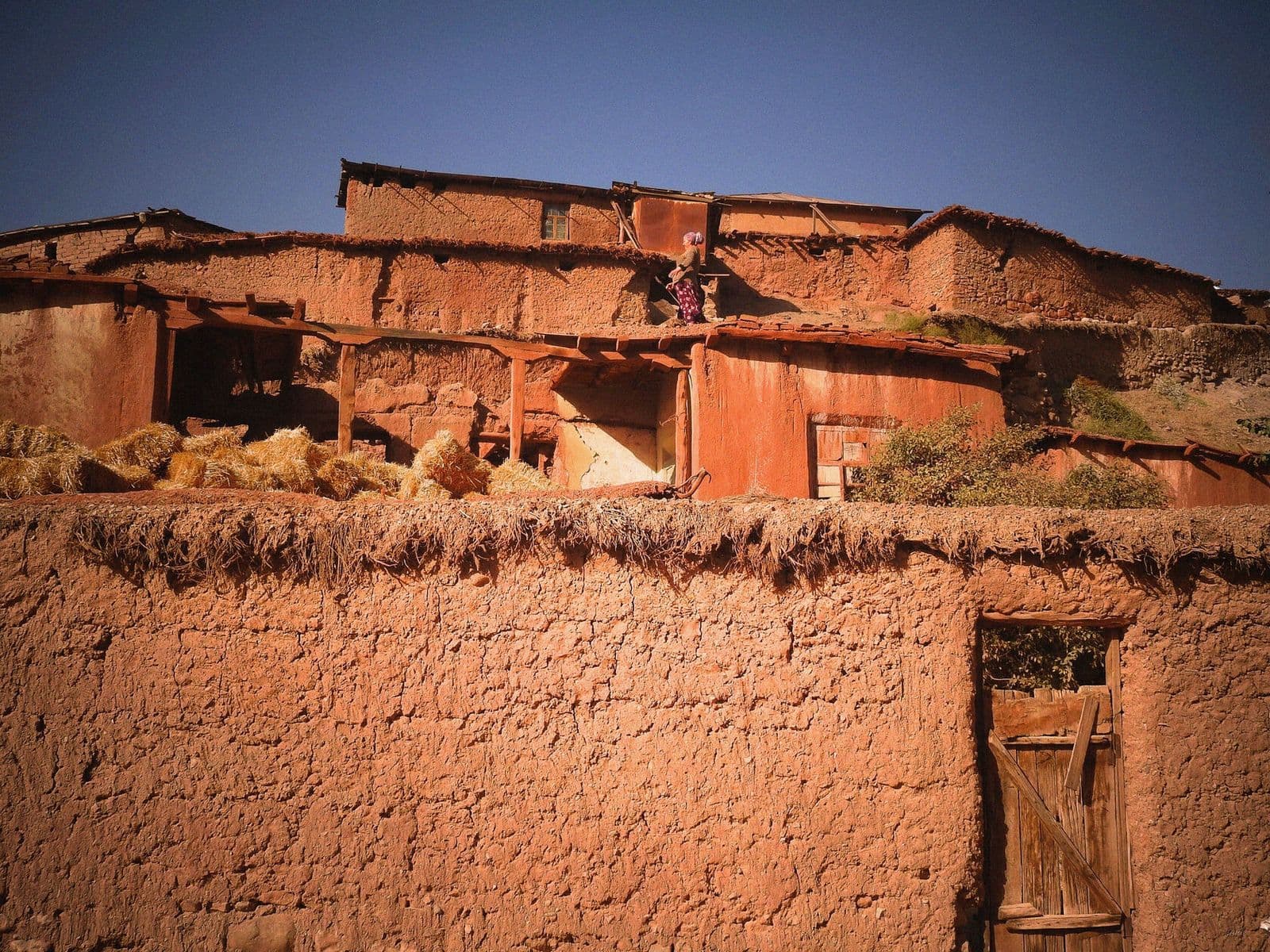
Katta Langar is a village high in the mountains of Kashkadarya, at the end of a road that winds up through canyons and stops when it runs out of valley. It has a mosque with carved wooden columns, a shrine on the ridge above, and a way of life that has changed very slowly.
It is the hardest place on this list to reach and the one that repays the effort most directly. There is nothing arranged for visitors here — no ticket office, no café, no signage — and that absence is the entire experience.
What to see
A village at the end of the road
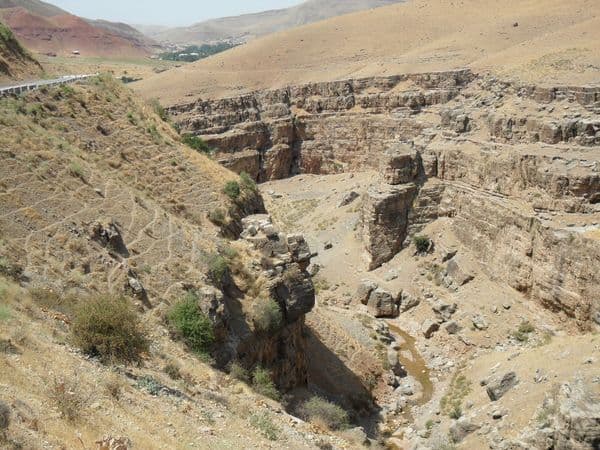
The approach is the first part of the visit. The road leaves the plain and climbs into a landscape of rock scarps and narrow valleys, crossing and recrossing a stream, with hamlets of flat-roofed adobe houses clinging to the slopes. It is slow going and the surface deteriorates as you climb.
Katta Langar itself sits in a bowl near the head of the valley, terraced fields below it and cliffs above. Houses are built of mud brick with wooden beams, as they have been for centuries, and the village works on agriculture and livestock rather than on visitors. People are used to the occasional arrival and are hospitable about it, but nothing is set up.
Langar-Ota on the ridge
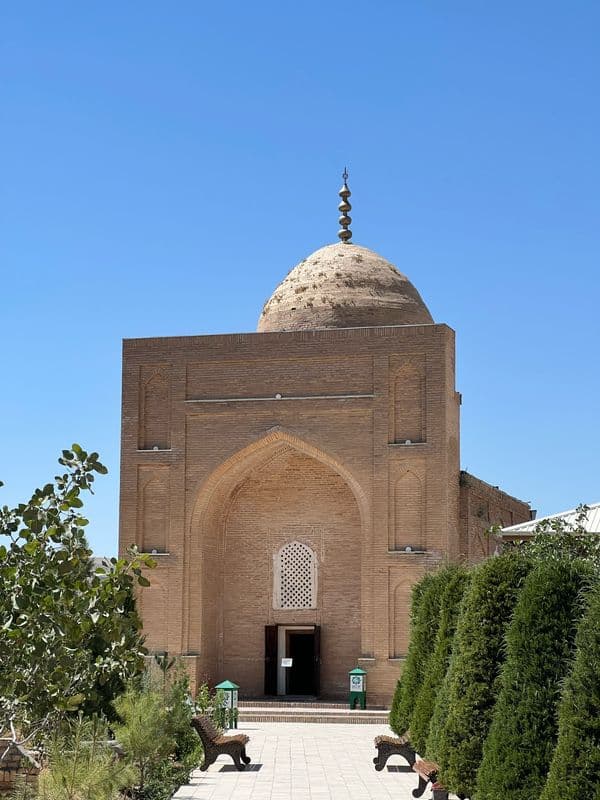
Above the village, on a spur with a long view down the valley, stands the mausoleum of Langar-Ota, a shrine that was the centre of a Sufi community and remains a place of pilgrimage. The building is modest — whitewashed, domed, with a small cemetery around it — and its importance is entirely to do with what happened here rather than with the architecture.
This community once held one of the oldest Quran manuscripts in existence, associated with the caliph Uthman; the pages went to state collections in the last century and are no longer here. The site is still visited, and the walk up to it at either end of the day is the single best thing to do in the village.
The wooden mosque
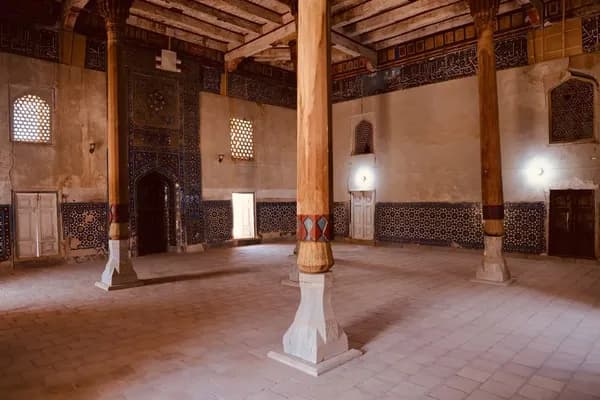
The old mosque in the village is the reason art historians know this place. It is a small building with a carved wooden portico, columns worked in a style that has almost disappeared, and a mihrab decorated with mosaic. The workmanship is far better than the size of the settlement would lead you to expect, which is itself the point: this was a centre, not a backwater.
It is usually open or opened on request, and someone from the village will generally appear to unlock it. As everywhere in the country, a covered head and a small contribution to the upkeep are the reasonable minimum.
Life in the canyons
The scenery is the other reason to come. The canyons around the village are deep and dry, with red and grey rock walls, and the viewpoints along the ridge look out over a landscape that is empty in every direction. There is good walking, none of it marked, and shepherds’ paths that go a long way if you have the time and a guide.
The village itself repays slow attention. Adobe construction, flat roofs used for drying fruit, water channels running between the houses, and a rhythm of the day set by livestock rather than by anything else — this is what most of Central Asia looked like before the last century, still functioning.
Practical realities are worth stating plainly. There is no hotel, no restaurant, no shop worth the name and no reliable mobile signal in the upper valley. Water should be treated. If you intend to stay, the arrangement is with a family and should be made in advance through a guide who knows the village — and bringing supplies rather than expecting to buy them is simply good manners in a settlement this small. Ask before photographing people, and expect to be fed whether or not you were planning to eat.
Seasons
Late spring is the season. The valleys are green, the streams run, and the road is usually in reasonable condition after the winter. Early autumn is the other window, dry and clear with the fruit harvest under way and the light at its best on the rock.
Summer is hot on the approach and cooler in the village, and it is workable if you travel early. Winter closes the district in practice: snow makes the upper road unreliable and there is no reason to attempt it. Check conditions locally before setting out at either end of the cold season.
Set out early in the day whichever season you pick. The road is slow, the light on the canyon walls is best in the first hours, and arriving in the village with time to spare is the difference between seeing it and driving through it.
Where it fits in a route
Langar is a detour from the Shakhrisabz to Karshi stretch, and it needs a vehicle with clearance and a driver who knows the road. Allow a full day from Shakhrisabz there and back, or stay in the village if a home can be arranged — which is how most people who come here do it.
It suits travellers who have already seen the monuments and want to see the country instead. Combined with Shakhrisabz for the architecture and Karshi for the engineering, it completes a picture of Kashkadarya that none of the three gives on its own.
No payment now. We reply with a tailored plan within a few hours.