
Kokand
A first look
Kokand was a capital, and it still carries itself like one. For most of a century this was the seat of a khanate that ruled the Fergana Valley and the country north of it, and the buildings from that period are unlike anything in Samarkand or Bukhara — later, lighter, and painted rather than tiled.
It is also the gateway to the valley: the road from Tashkent comes through a mountain gap and arrives here first. Most travellers see it in passing. It repays a longer look, particularly if you care about woodwork.
What to see
The last khanate
The Kokand Khanate emerged as the Timurid inheritance broke up, and it grew rich on trade and on the fertile valley it controlled. At its height it held territory well beyond Fergana, and it was one of three states — with Bukhara and Khiva — that the Russian empire dealt with as it moved into the region.
Kokand was the one that ended most abruptly. It was abolished outright rather than reduced to a protectorate, which is why the palace of its last khan feels like a building interrupted rather than a building outgrown. The town afterwards became a commercial centre for cotton, and much of what you see beyond the monuments dates from that period.
The palace of Khudoyar Khan
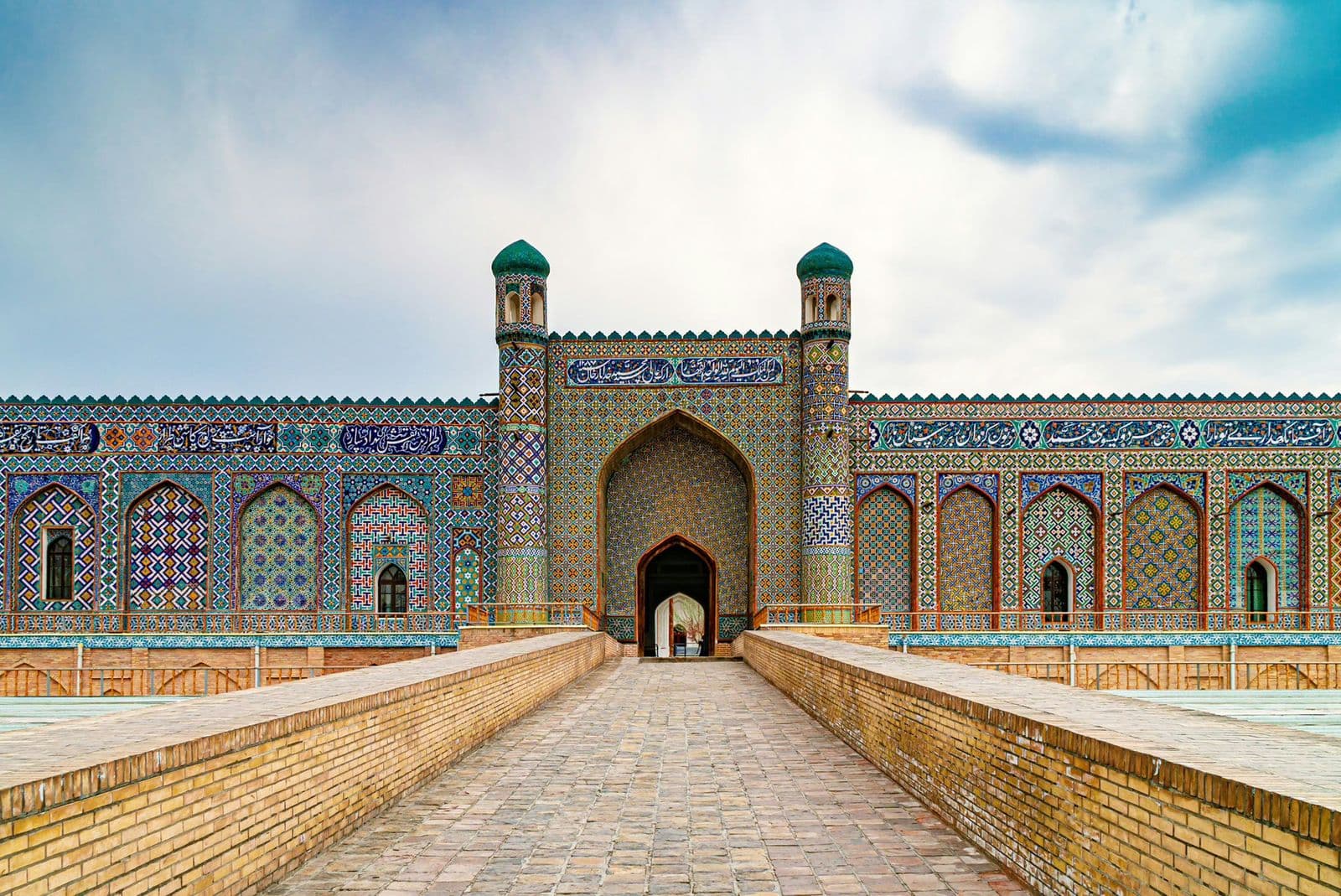
The palace is the reason to stop. A long facade of glazed tile in green, blue and yellow runs the width of a parade ground, with a ramped entrance built for a mounted arrival and towers at either end. It reads as ceremonial, because that is what it was.
Inside, the surviving rooms are the surprise. Each has a painted and gilded ceiling in a different design, worked in the local decorative tradition rather than the classical Timurid one — closer in spirit to a lacquered box than to a mosque. Only a fraction of the original complex still stands, and a plan on display shows how much is missing, which is worth studying before you walk through.
Wood, ceiling and column
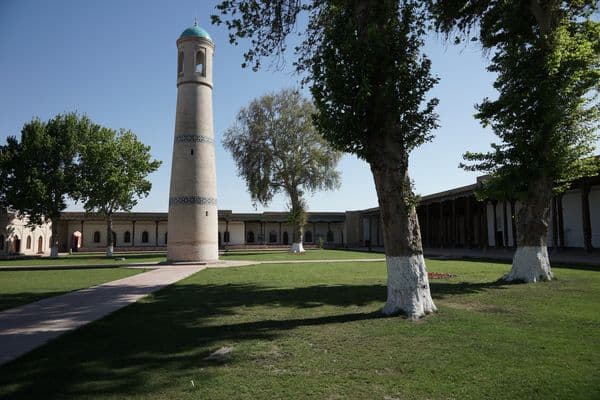
Kokand is a woodworking town. The Jami mosque is the demonstration: a wide, low prayer hall whose roof rests on a long colonnade of carved elm, each column on a stone base, the whole thing cool and dim on the hottest day. It is closer in feeling to the Juma mosque in Khiva than to anything else in the valley.
The same craft runs through the town in doors, lecterns and the painted ceilings that Kokand masters were called to Tashkent and Samarkand to make. Workshops still operate, and carved doors are the thing to look for if you are buying — heavy, awkward to ship, and unlike anything sold in the tourist cities.
The rest of the old town
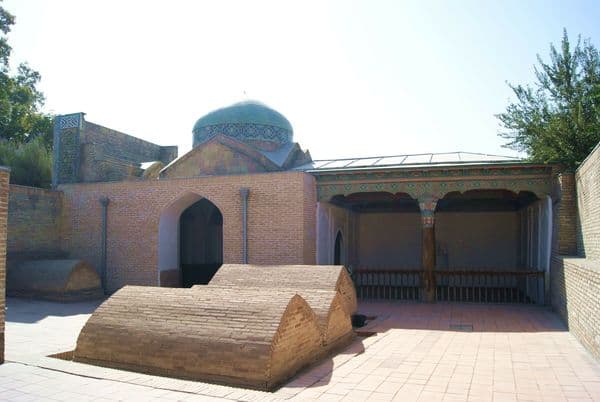
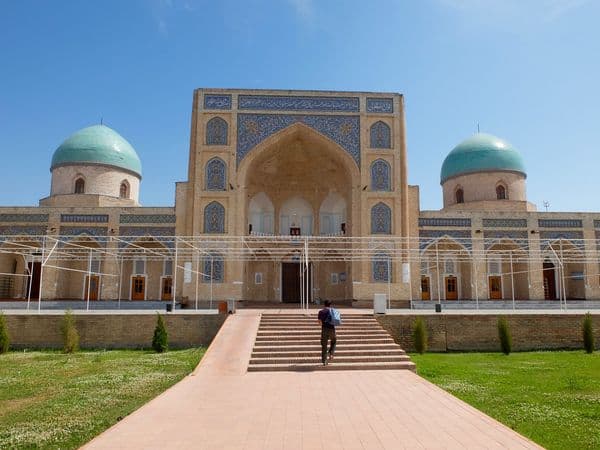
The Dakhma-i-Shahon is the burial vault of the khans, entered through carved wooden doors that are among the best pieces of woodwork in the country. The Narbuta-bey madrasah, the largest of the khanate’s religious foundations, still stands with its courtyard and cells and conveys the scale of learning the town once supported.
Around these the ordinary town continues: a bazaar nobody has arranged for visitors, tea houses, and residential mahallas where the doors are the thing to notice. Kokand is not a museum town, and walking here without a destination is time well spent.
The bazaar deserves a visit of its own rather than a glance in passing. Kokand sits at the western end of the valley, so produce arrives here from the whole basin, and the fruit rows in late summer and autumn are among the best in the country. The dried-fruit stalls, the bread counters and the tea shops are where the town is most itself.
The food follows the valley pattern rather than the desert one: lighter than Bukhara, heavier on herbs, and built around the fruit and vegetables that grow within sight of the town. Ask for the local flatbread, which is baked differently here than further west, and eat it the same day it comes out of the oven.
When to come
The valley climate is kinder than the desert. Spring brings blossom to the whole basin and is the best time to be here; early autumn brings the harvest and comfortable weather that lasts. Summer is hot, but there is shade and water, and the palace interiors stay cool.
Winter is grey, damp and occasionally snowy, and the town is quiet. Painted ceilings do not need sunshine, so a cold-season visit is more viable here than in places that depend on tilework catching the light.
Where it fits in a route
Kokand is the first town in the valley coming from Tashkent, so it sits naturally at the start or the end of a Fergana loop. A common pattern is Kokand on the way in, Rishtan and Margilan in the middle, and out again the same way.
If you only have a day for the valley, spend it on silk and ceramics instead — those are the things you cannot see elsewhere. If you have longer, Kokand earns its place, because it is the only town here that explains why the valley was worth ruling.
No payment now. We reply with a tailored plan within a few hours.