
Karshi
A first look
Karshi is the capital of Kashkadarya and the main town on the road south, and most travellers pass through without stopping. It is worth an afternoon, largely for one bridge and one reservoir — which sounds thin until you understand what they were for.
The city is old, built on the ground of ancient Nasaf, and it has been rebuilt and renamed enough times that the layers do not sit neatly on top of one another. What holds it together is water: almost everything worth seeing here is about moving it, storing it or crossing it.
What to see
Nasaf and the road south
The settlement here has been continuously important because of where it sits — on the edge of the steppe, at the point where the road from Samarkand and Bukhara turns south towards the crossings of the Amu Darya. Caravans had to come through, which meant the town could tax them, and it grew accordingly.
Ancient Nasaf stood slightly apart from the modern centre and gave the region a name that appears in medieval geographies across the Islamic world. The present town takes its name from a fortified palace built later, and that change of name marks a change of purpose: from a trading city to an administrative one.
The district around the city is one of the country’s main gas-producing regions, which explains the scale of the modern town and why it feels more industrial than historic. That is worth knowing before you arrive, because it sets expectations correctly: Karshi is a working regional capital that happens to contain two remarkable pieces of medieval engineering, not a heritage town.
The city parks are also better than the town’s reputation suggests. Karshi has invested in its riverside and public squares, and in the evening the whole place seems to be out in them. It is a good spot to sit after a day on the road south, which is frequently exactly why travellers find themselves here at all.
The bridge
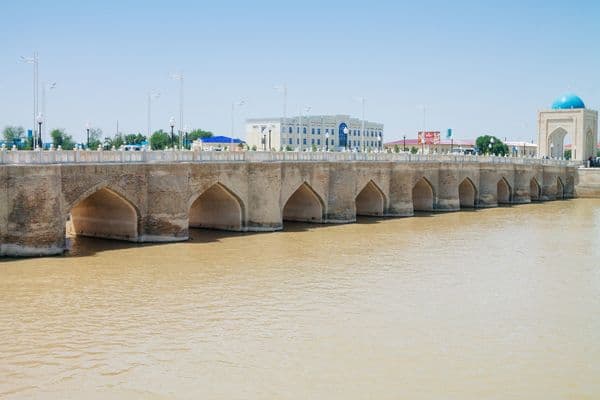
The stone bridge attributed to the Timurid period is the thing to see. It crosses the Kashkadarya river on a series of brick arches, it is long by the standards of medieval bridge-building anywhere, and it is still standing — which for a structure built to carry caravan traffic over a river that floods is a considerable achievement.
Walk out onto it and look at the piers. They are shaped to split the current, and the brickwork has been repaired in different periods with visibly different technique, which makes the bridge a record of its own maintenance. It is the single most impressive thing in the city, and almost nobody stops for it.
Water under the ground
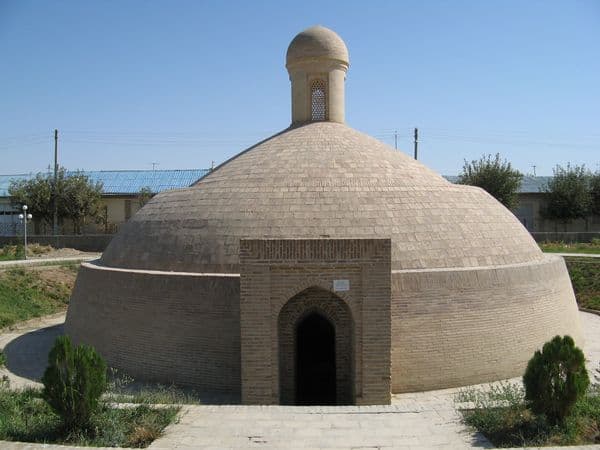
The sardoba is the other engineering piece: a domed underground cistern built to collect and hold water in country where the surface supply fails for part of the year. The dome keeps the water cool and cuts evaporation, and steps lead down to the surface of the pool.
These were built along the caravan roads across the whole region, and most have gone. The one here survives well enough to walk into, and the drop in temperature as you descend the steps explains the design better than any description could. If you have crossed the steppe in summer, it is a very direct lesson in what actually mattered.
The old town
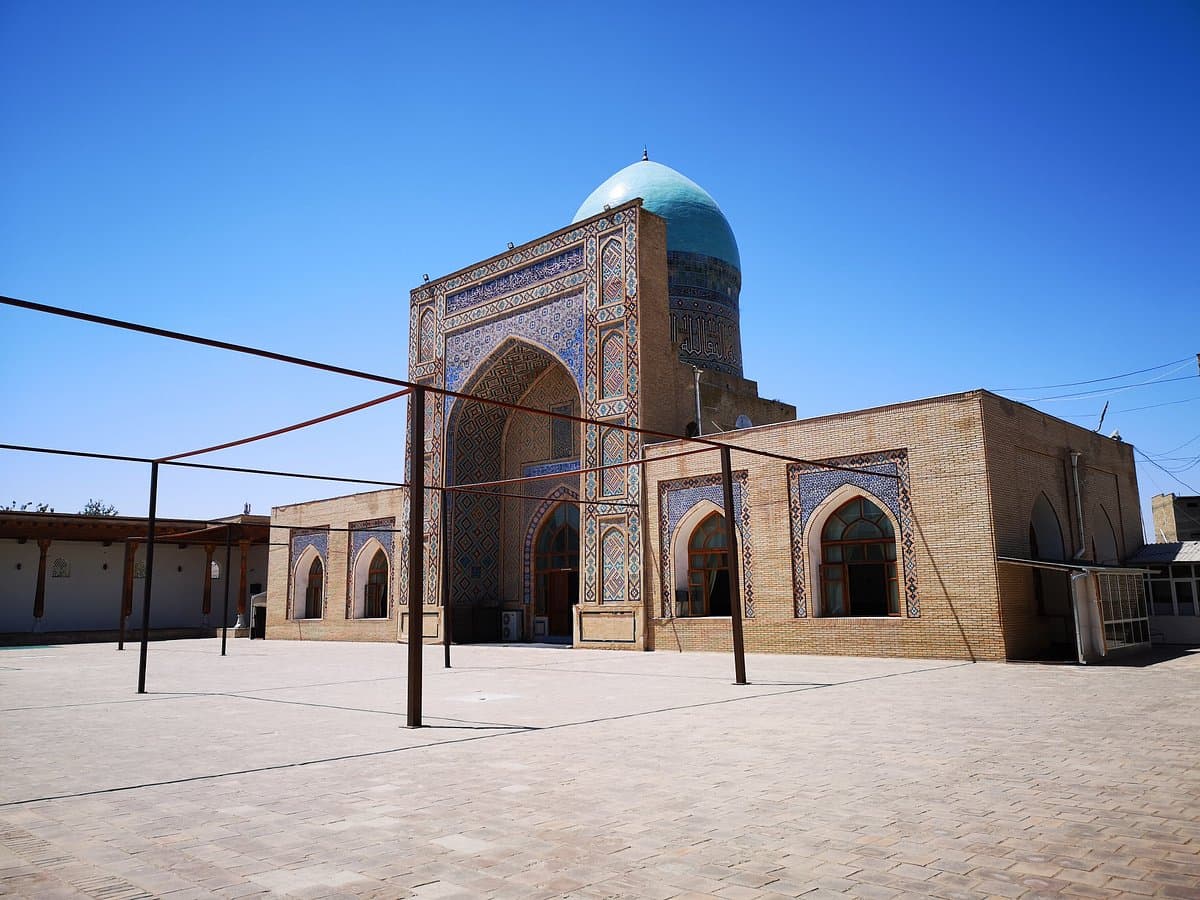
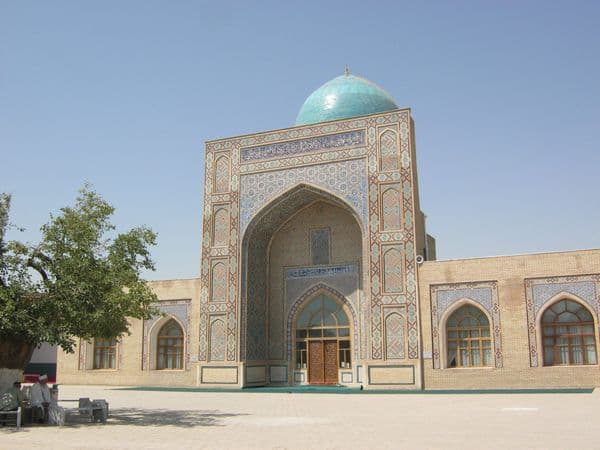
The Odina madrasah is the local rarity: a medieval madrasah built specifically for the education of women, which was not common anywhere. It stands in the old quarter along with the Kok-Gumbaz mosque, whose blue dome gives it the same name as the mosque in Shakhrisabz and no other resemblance at all.
The rest of the old town is low, brick and residential, with a bazaar that serves the surrounding district rather than any visitor. Karshi has not been prepared for tourism in the slightest, which is either its charm or its problem depending on what you came for.
When to go
Karshi is hot — not Termez hot, but hotter than Samarkand, and the steppe around it gives the summer a hard edge. Spring is short, green and much the best time to be here. Autumn is dry and comfortable from the point the heat lets go.
Winter is cold with wind off the steppe, and the town is bleak in grey weather. The sardoba and the bridge are outdoor sights with no shelter, so the shoulder seasons do more for this city than they do for places with interiors to retreat into.
Where it fits in a route
Karshi sits on the road between Samarkand or Shakhrisabz and the far south, and that is how to use it: a stop of a few hours rather than a destination in itself. It fits naturally into a drive from Shakhrisabz towards Termez, breaking up a long day on the road.
It also has an airport and a rail connection, which makes it a practical base for the wider Kashkadarya region. Travellers heading for Baysun or the mountains of the south-east often route through here, and the bridge is worth the detour into town even if you are only changing vehicles.
No payment now. We reply with a tailored plan within a few hours.