
Kanimekh
A first look
Kanimekh sits on the edge of the Kyzylkum, and it exists on a traveller’s map for one reason: this is where the steppe way of life is still close enough to the surface to be shown properly. Yurts, camels, songs by a fire, and a landscape with nothing in it in any direction.
It is quieter and less developed than the yurt camps near Aydarkul, which is the point. Where those have become a fixture on the standard route, this is still a district where a visitor is unusual and the evening is not on a schedule.
What to see
The edge of the Kyzylkum
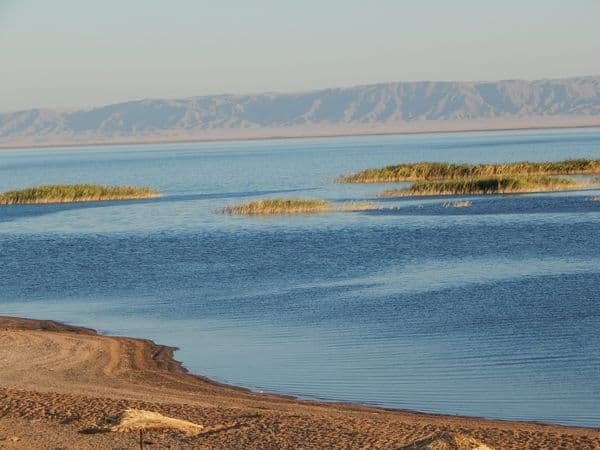
The country here is flat, pale and open: scrub, low dunes, salt pans and grazing land, with the desert proper beginning a short way out. It is not the dramatic sand-sea of a photograph — the Kyzylkum is mostly this, a working landscape where herders move stock and the horizon does all the work.
The district is Uzbek and Kazakh in equal measure, which shows in the language you hear, the food and the music. That mix is part of what makes the place distinctive: it is a border country in cultural terms, and traditions from both sides of it are practised here without anyone treating it as remarkable.
Getting here takes some organisation. The turn off the main road is unremarkable and the track beyond it is sand in stretches, so transfers are normally arranged through the camp rather than attempted independently. There is no public transport worth the name and no fuel or supplies close by, which is a large part of why the district has stayed as quiet as it has.
What that buys is genuine emptiness. Once the vehicle stops and the engine cools, the only sounds are wind and livestock, and the horizon is unbroken in every direction. Travellers who have done the yurt-camp experience nearer the main road often describe this one as the version they wish they had done first, precisely because nothing here is calibrated for a coach party.
The yurt village
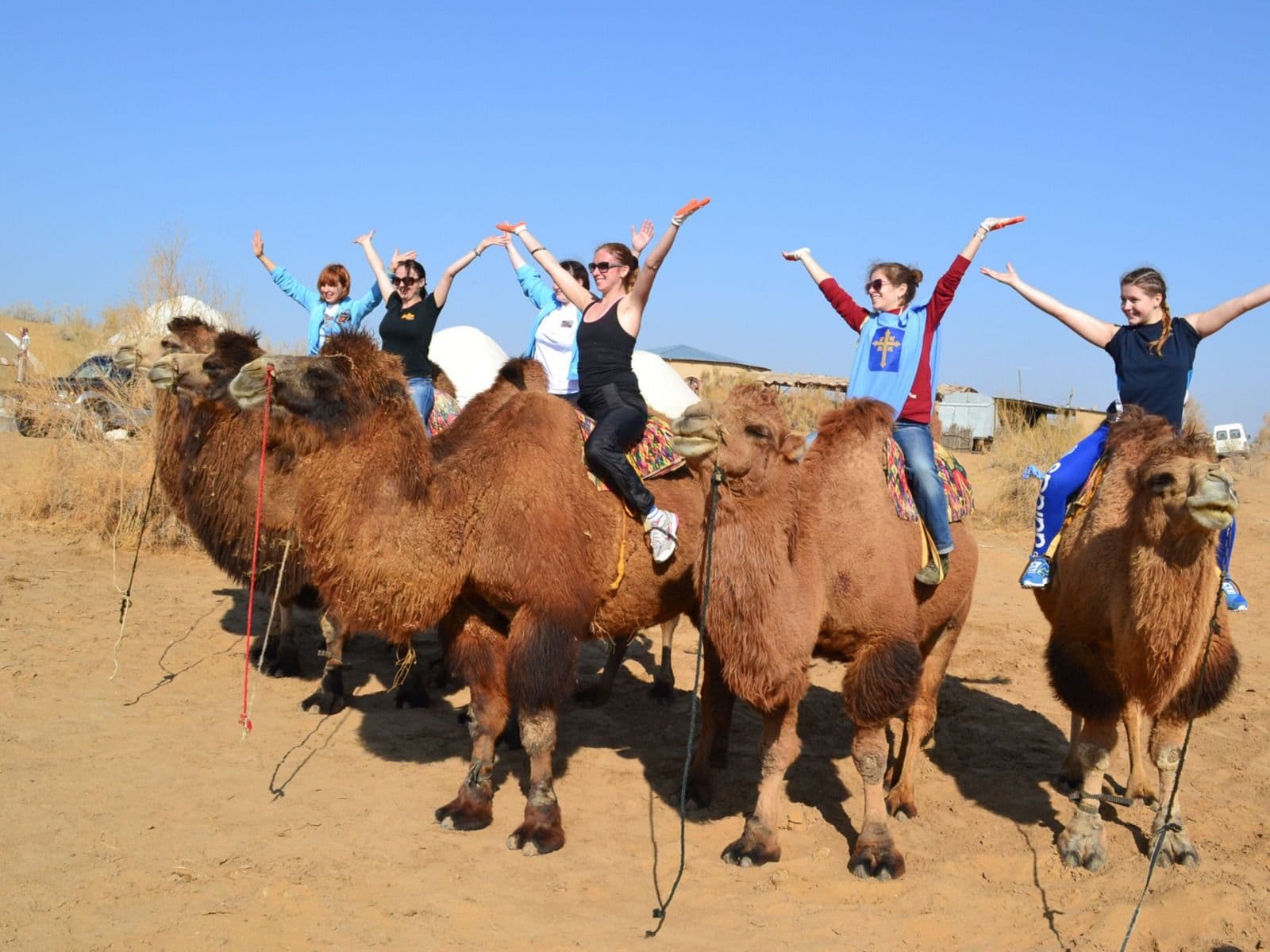
The eco-park is a cluster of yurts on the sand with a camel farm attached, and it is run as a working operation rather than a stage set. The yurts are the real thing: felt over a wooden frame, cool in the day, warmed by a stove at night, with bedding on the floor.
Meals are cooked over fire and eaten communally, and the food is steppe food — meat, bread, dairy, tea in quantity. Ask about the dairy in particular; fermented camel and mare’s milk are drunk here as a matter of course, and trying them is a more genuine cultural experience than most things sold as one.
Camels and the dunes
The camels here are Bactrian — two humps, heavy coat, built for cold nights as much as hot days — and the farm keeps a working herd rather than a handful for photographs. Rides go out over the dunes, and the pace and the height take some adjustment.
Riding aside, the herd itself is worth time. Watching the animals being handled, fed and milked explains the economy of this landscape better than any explanation of it, and the people doing the handling are usually willing to talk about it through whoever is translating.
Songs by the fire
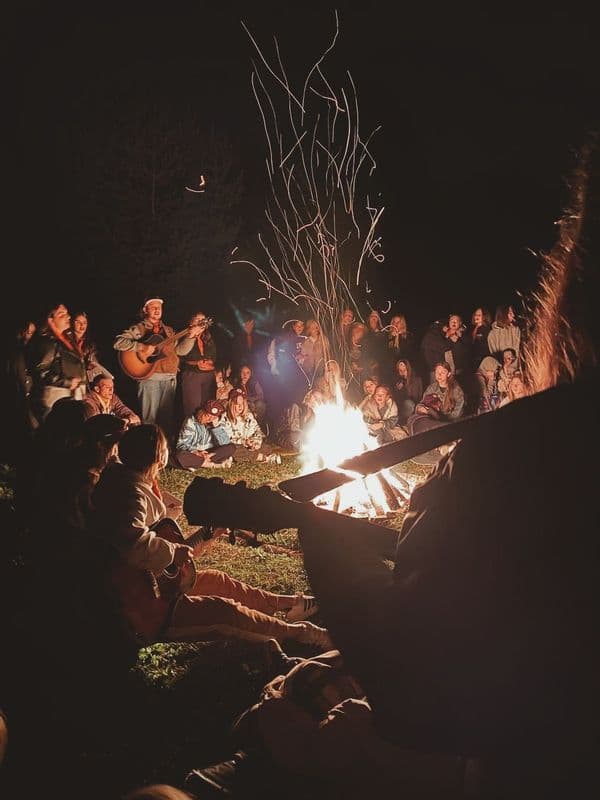
The evening is the reason to stay overnight rather than pass through. A zhyrau — a singer in the Kazakh epic tradition — performs to the dombra, and the form is old: long narrative songs, delivered in a style that carries over open ground without amplification.
It is not a floor show. The performance is short, the audience sits on the sand, and afterwards the fire burns down and people talk. Then the sky takes over, which out here means more stars than most visitors have ever seen at once, because there is no settlement close enough to put light into it.
Seasons
Spring is the best season by a distance: the steppe greens, tulips and other bulbs come up on the flat ground, and the days are warm without being punishing. Autumn is the second choice, dry and clear with cold nights that make the stove welcome.
Summer is severe and the middle of the day is spent in shade; the camps operate but the appeal narrows to the evening. Winter is cold, windy and stark, and a yurt with a lit stove under a hard sky is genuinely memorable — but it is a harder trip than most people expect when they book it. Book through the camp rather than an agency in the city; the people running it know the road and the weather better than anyone else will.
Where it fits in a route
Kanimekh lies in the Navoi region, off the road between Samarkand and Bukhara, which makes it an alternative to the Aydarkul camps for breaking that leg. It is further from the main road and correspondingly quieter.
One night is the standard and it is enough — this is a place with a single strong experience rather than a list of sights. Combine it with the Sarmyshsay petroglyphs, which are in the same region, and the two together make a genuinely different day between the two great Silk Road cities.
No payment now. We reply with a tailored plan within a few hours.