
Fergana Valley
A first look
The Fergana Valley is the part of Uzbekistan most itineraries skip, and the part that most rewards the traveller who does not. It is not a single town but a broad bowl of orchards, cotton and small cities, ringed by mountains on three sides and reached through a pass.
What makes it worth the detour is that the crafts here are not demonstrations. Silk is woven because there is a market for silk; pottery is thrown because people need bowls. You can follow the whole chain — cocoon, loom, the bolt of cloth on a bazaar stall — inside a single day.
What to see
A valley apart
Geography made this place different. The mountains closing the valley on three sides hold in the water and the warmth, so the land is far more fertile than anything around it, and it has been densely settled and intensively farmed for a very long time.
That fertility made it worth fighting over. This was the heart of the Kokand Khanate, one of the three states that divided the region before the Russian conquest, and it kept a distinct identity through everything that followed. Today the valley is shared between three countries, and the borders run in shapes that look accidental on a map and are anything but. On the Uzbek side the towns are close together, and each has its own trade.
Silk in Margilan
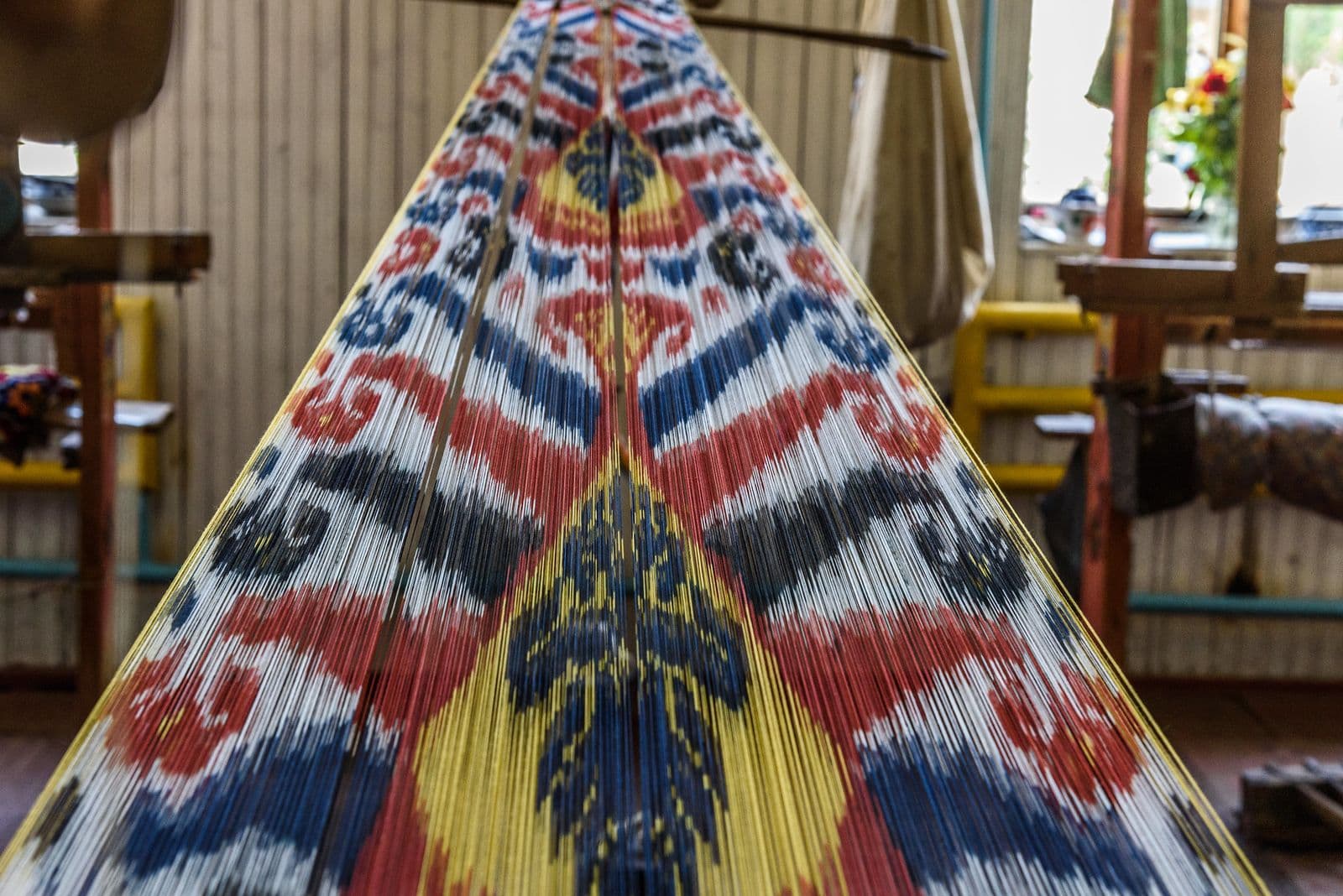
Margilan has woven silk for as long as the record goes back, and it still does. The process is unhurried and almost entirely manual: cocoons are boiled and unwound, the thread is spun, and then — for ikat — the warp is bound in bundles and dyed in stages, so the pattern exists in the threads before a single one is woven.
When the loom finally runs, the design emerges with soft feathered edges. That blur is the signature of the technique and the reason the cloth is called abrbandi, cloud binding. Workshops are open to visitors and the weavers are used to being watched. Buy at the factory shop or in the bazaar; the difference is in the silk content, and they will tell you honestly if you ask.
Clay in Rishtan
Rishtan sits on a bed of clay fine enough to be used with little preparation, which is why the town has been making pottery for centuries and why its glaze is unmistakable. The colour is a deep blue-green, drawn from ash and mineral pigment, and it lies over a white ground under a finely crackled surface.
Family workshops still work here in numbers, and most will let you watch the wheel and the kiln. The classic pieces are the wide shallow dish for plov and the tea bowl, decorated with knives, birds and pomegranates. Because production is local and continuous, this is the cheapest and by far the widest choice of ceramics in the country.
Kokand and the khanate
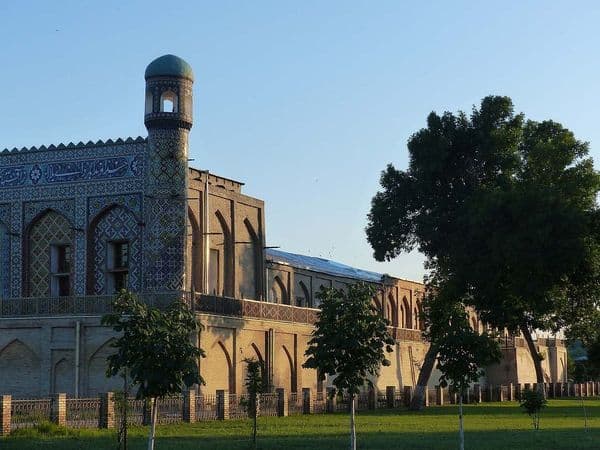
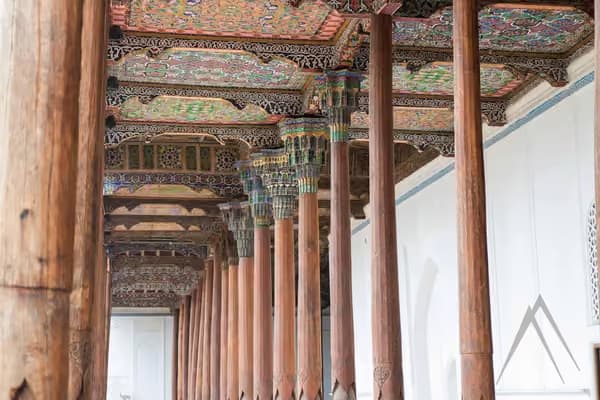
Kokand was the capital, and the palace of the last khan is what remains to show for it: a long facade of glazed tile, a courtyard, and painted ceilings in the surviving rooms, no two alike. It is a strange building — grand, ornate, and cut short by history in mid-sentence — and it explains the valley better than any museum could.
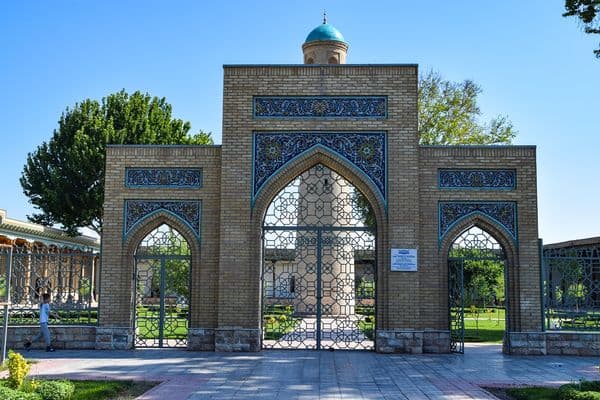
Around it the town keeps a scattering of madrasahs and mausoleums, and a bazaar nobody has tidied up for visitors. Kokand is usually seen on the way in or out, since the road from Tashkent passes through it before the valley opens.
Bazaars, orchards and the table
The valley grows the country’s fruit and the bazaars show it: apricots, cherries, peaches, grapes, pomegranates and melons in their turn, sold in quantities that assume you are buying for a family. These markets are among the most colourful in Uzbekistan and among the least used to foreign visitors, which makes them welcoming rather than practised.
The cooking is straightforward and generous. Expect plov, naturally, but also hand-pulled noodles, dumplings steamed in stacked trays, and bread baked with a heavier hand than in the west of the country. Tea arrives constantly and is refused at your peril.
One warning worth having: portions here assume a working appetite, and food left on the plate is read as a comment on the cooking rather than on the quantity. Pace yourself early in the day, especially if more than one household has invited you.
When to go and how it fits
Late spring and early autumn are the seasons. Spring brings blossom across the whole valley and the fruit that follows it; autumn brings the harvest and the mildest weather of the year. Summer is hot but less brutal than in the desert cities, because there is shade and water here.
The valley is a loop out of Tashkent rather than a stop on the westbound line. Allow a couple of days at least: the road climbs through a pass, and the towns sit far enough apart that rushing them defeats the point. Travellers who came for craft rather than monuments often rate this as the best part of the country.
No payment now. We reply with a tailored plan within a few hours.