
Ellik Qala Fortresses (Ancient Khorezm)
A first look
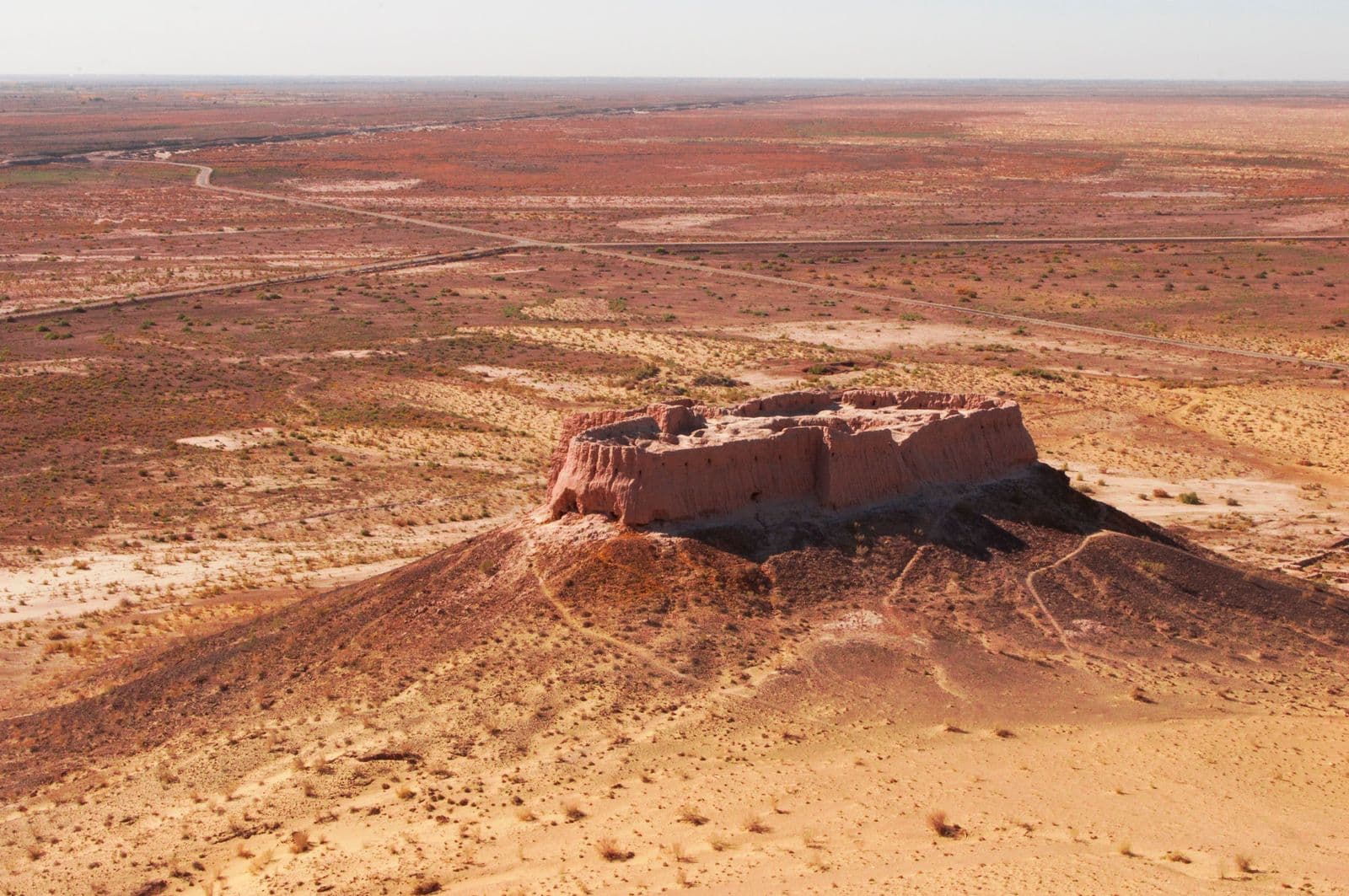
Ellik Qala means fifty fortresses, and the name is a fair description. Scattered across the desert north-east of Khiva stand the mud-brick castles of ancient Khorezm: hill forts, walled towns, a royal palace, and a great many mounds that have not been excavated and probably never will be.
They are the oldest thing most travellers see in Uzbekistan by a wide margin, and the least explained. There are no crowds, very little signage and almost no reconstruction. What there is instead is scale, silence and a horizon of sand, which for the right visitor is a better deal.
What to see
The castles in the sand
Khorezm before Islam was a distinct civilisation with its own language, script and religion, watered by canals off the Amu Darya and defended by a ring of fortresses against the steppe. The forts went up over a long span, were rebuilt, abandoned and reoccupied, and were finally left when the river shifted and the irrigation failed.
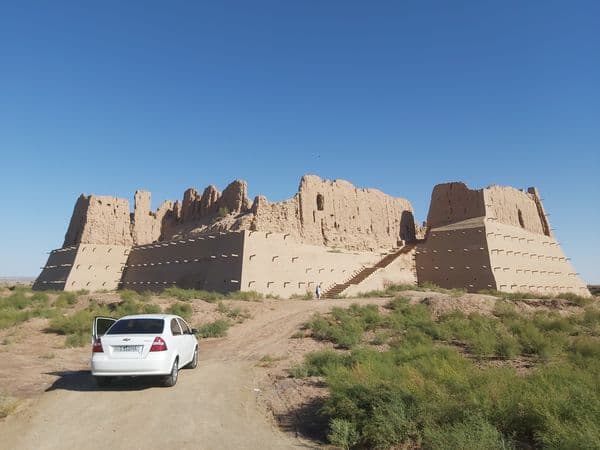
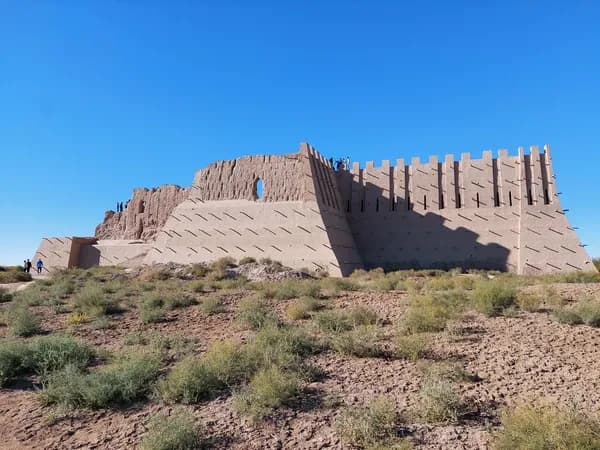
What survives is adobe: walls of mud brick that have weathered into shapes closer to landform than architecture. That is why the sites read strangely at first. You approach what looks like a natural ridge and only at the base does it resolve into a wall with a gate, a corner tower and a line of arrow slits.
Ayaz-Kala on its hill
Ayaz-Kala is the one everybody photographs and the one to see first. It stands on a flat-topped hill above the plain, and it is not one fortress but several from different periods on and around the same height, so the climb takes you past more than one idea of how to defend a place.
The walk up is short and steep and the reward is the view: dunes running to the horizon in one direction, irrigated green in the other, and the outline of the next fortress visible across the flat. Go early or late. In the middle of the day the light flattens everything and the heat off the walls is considerable.
Toprak-Kala, the royal city
Toprak-Kala was not a fort but a capital: a walled rectangular city with a grid of streets and, at one corner, a palace raised on a high platform with towers. Excavation here produced wall paintings and clay sculpture that changed what was known about the region, and those finds are now in museums rather than on site.
On the ground you get the plan, which is worth more than it sounds. Walk the length of a main street, stand in the palace platform, and the shape of an ancient city becomes legible in a way it never does in a ruin that has been rebuilt. A guide makes a large difference here; without one it is a field of walls.
What the fortresses were for
The obvious answer is defence, and it is partly right — this was the edge of settled country and the steppe beyond it held people who raided. But several of these sites are too large, too regular and too well appointed to be simply garrisons, and some appear to have served as ceremonial or administrative centres for a stretch of irrigated land.
Kyzyl-Kala, smaller and better preserved than most, shows the military side plainly: thick walls, bastions at the corners and loopholes at two levels. Seeing it after Toprak-Kala makes the difference between a fort and a city clear, and it is the pairing that makes a visit here worth planning rather than improvising.
When to come
Spring, without much argument. The desert greens briefly, the temperature is workable and the light is good for the long views these sites depend on. Autumn is the second choice, dry and clear once the heat has broken.
Summer is genuinely dangerous here rather than merely uncomfortable: the sites are unshaded, the walls throw heat back, and the walk up Ayaz-Kala in the middle of a summer day is not a reasonable thing to attempt. Winter is cold and windy but perfectly viable, and the low sun does flattering things to mud brick. Whatever the month, start early: the light and the temperature are both better before the middle of the morning.
Where it fits in a route
This is a day out from Khiva or a stop on the road north to Nukus, and the second is the better use of it. Leaving Khiva in the morning, taking in two or three fortresses and arriving in Nukus in the evening turns a dull transfer into the most interesting day of a Khorezm trip.
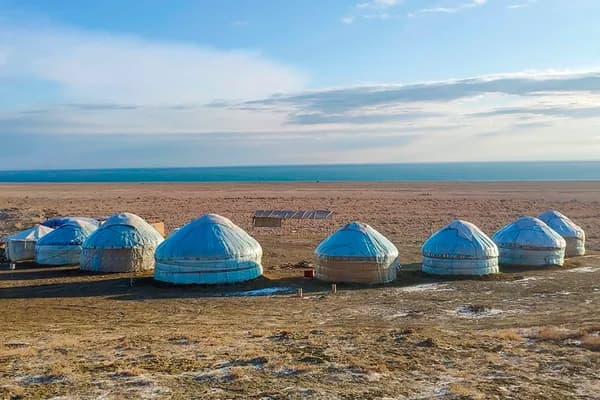
There is a yurt camp beside Ayazkul, the salt lake below the fortress, for anyone who wants to stay out here rather than pass through. It is a quieter and emptier alternative to the camps near Aydarkul, and waking up under the fortress is a different experience from driving up to it.
Practicalities matter more here than at most sites. There is no shade, no water and no facilities at any of the fortresses, the tracks between them are sand in places, and a vehicle with clearance is worth having. Carry more water than you think you need, take a hat, and treat the whole outing as a desert trip rather than a sightseeing drive — because that is what it is, and people underestimate it every season.
No payment now. We reply with a tailored plan within a few hours.