
Andijan
A first look
Andijan is the far east of the country, the last large city before the mountains close the valley, and it has two claims on a traveller’s attention. It is where Babur was born, and it is one of the best places in Uzbekistan to eat.
It is not a monument city. An earthquake took most of the old town at the start of the last century, and what stands now is largely from the decades that followed. What survives here is the culture rather than the fabric: the bazaars, the knife-makers, and the particular hospitality that people from the rest of the country will tell you about before you go.
What to see
The town Babur left
Zahiriddin Muhammad Babur was born here into a small principality, lost it young, spent years fighting for and losing cities across the region, and eventually went south, crossed into India and founded the dynasty the world knows as the Mughals. He also wrote one of the great autobiographies in any language, and he wrote it in Chagatai Turkic rather than Persian, which is part of why it is still read here.
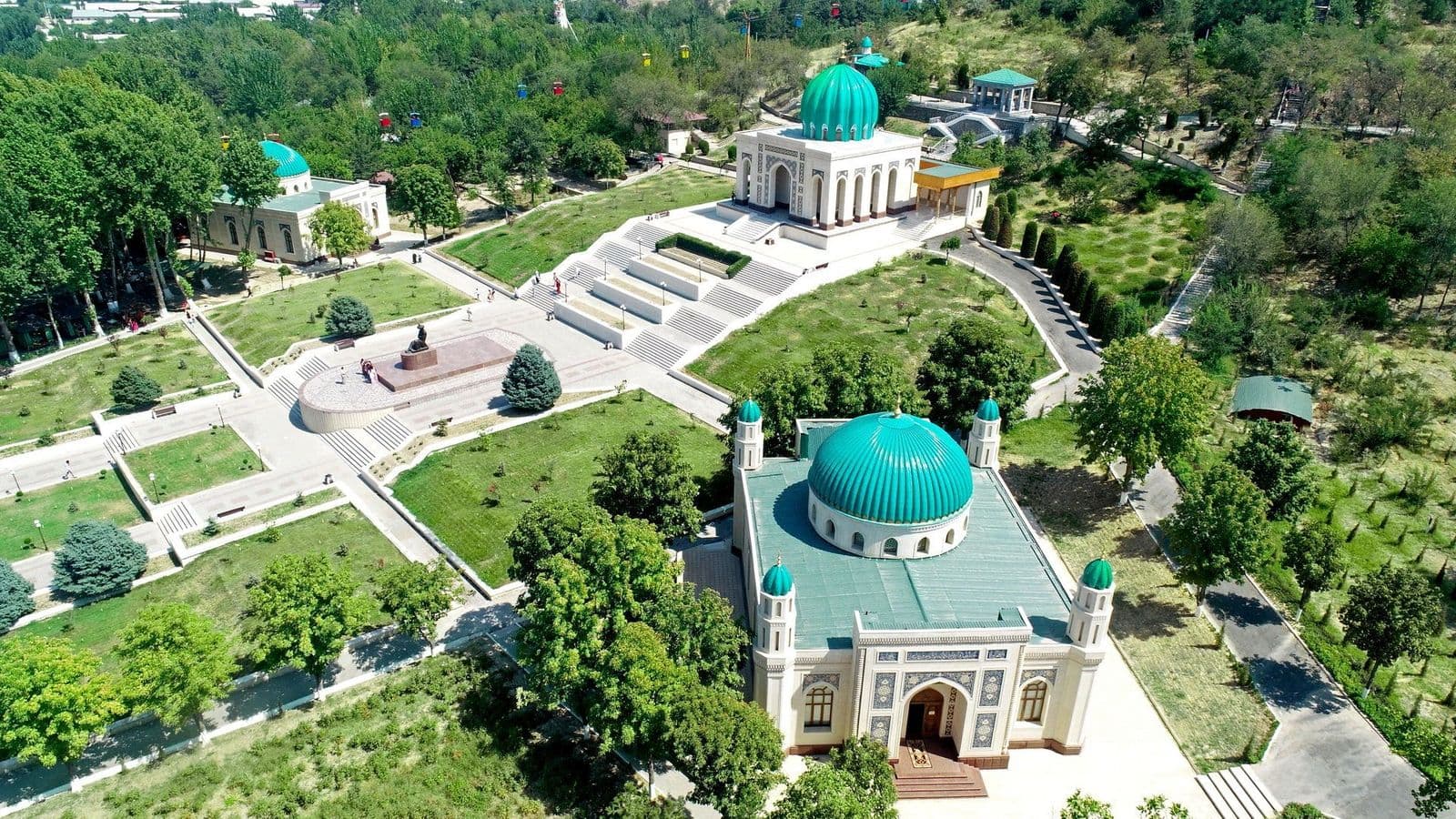
The Baburnama opens with Fergana, and the passages about this valley — its melons, its birds, its endless politics — are why a memorial park stands on the height above the city. There is a museum, a symbolic tomb built with soil brought from Kabul where he is actually buried, and a view out over the town he never saw again.
What the city is now
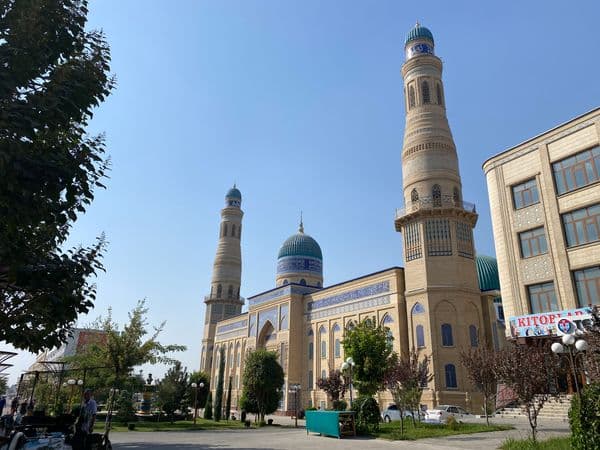
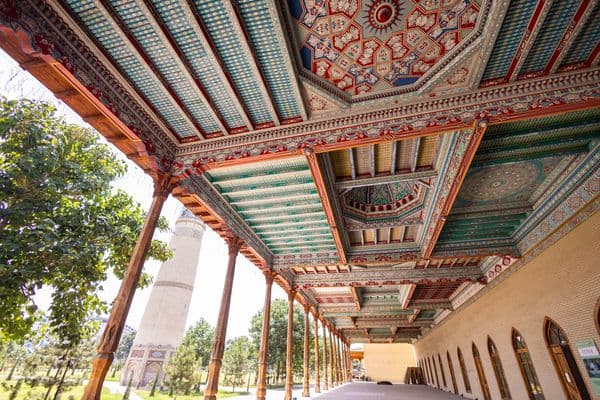
Andijan today is a working provincial capital, broad and green, laid out after the earthquake and adjusted again through later rebuilding. The Jami complex is the main survival: the largest madrasah in the valley with a tall minaret beside it, now holding a museum and craft workshops.
Around it the city goes about its business. There is more traffic and less English here than anywhere on the standard route, and almost no tourism infrastructure aimed at foreigners. That is either the drawback or the attraction, depending entirely on why you travel.
The layout rewards walking. The centre sits on a grid with wide pavements and heavy tree cover, so distances that look long on a map are pleasant on foot for most of the year. The area around the Jami complex and the main bazaar is where to start, and almost everything worth seeing in the centre falls within that stretch.
The reservoir east of the city is the local escape, with tea houses along the shore and views back towards the mountains. It is not a sight in the guidebook sense — nobody comes to Andijan for it — but it is where the city goes at the weekend, and time spent there tells you more about the place than another museum would.
Knives, and what else is made
Andijan knives are the craft the city is known for. They have a curved blade, a horn or wood handle and often an inscription along the spine, and they are working tools rather than souvenirs — every household kitchen in the valley has one. Smiths still forge them in the bazaar quarter and will make one to order if you have the time.
Beyond knives the district produces embroidery, skullcaps in the distinctive local pattern, and metalwork. The craft centre inside the Jami complex gathers several trades in one place, which is the quick way to see the range when time is short.
The table
This is a serious food city, and the claim is not local pride alone — people travel here from Tashkent to eat. Valley cooking is built on what grows within sight of the city, so vegetables and herbs arrive in quantity, and the meat dishes are heavier and more generously spiced than in the west of the country.
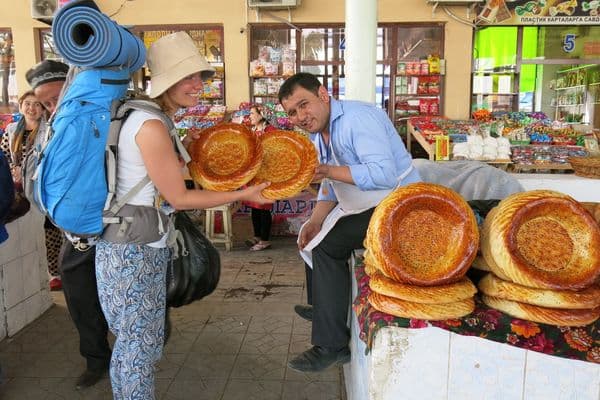
The specific things to look for are the local hand-pulled noodles, the flatbread baked in the Andijan style, and whatever fruit the season is producing. Meals here are long and communal, and declining a second helping is a negotiation rather than a decision.
Around the city
The Erkishtach site outside town is an excavation of a settlement on the old trade road, and it gives a sense of how long this ground has been worked. It is a site for people content with foundations and a good explanation rather than standing walls.
Beyond it the district runs up into hills and orchards, and the road east climbs towards the border. The countryside around Andijan is greener and more mountainous than the rest of the valley floor, and a drive out of town in either direction repays the time.
When to go and how it fits
Spring and autumn, as everywhere in the valley. The city is at its best in blossom season, and the autumn markets are the strongest argument for coming at that end of the year. Summer is hot without being desert-hot; winter is grey and quiet.
Andijan is the far end of the Fergana loop and the town most often dropped when a schedule tightens. If you are cutting something, cut this before Margilan or Rishtan — but if the point of the trip is food and ordinary life rather than architecture, invert that advice entirely.
No payment now. We reply with a tailored plan within a few hours.